

Cedar Fencing
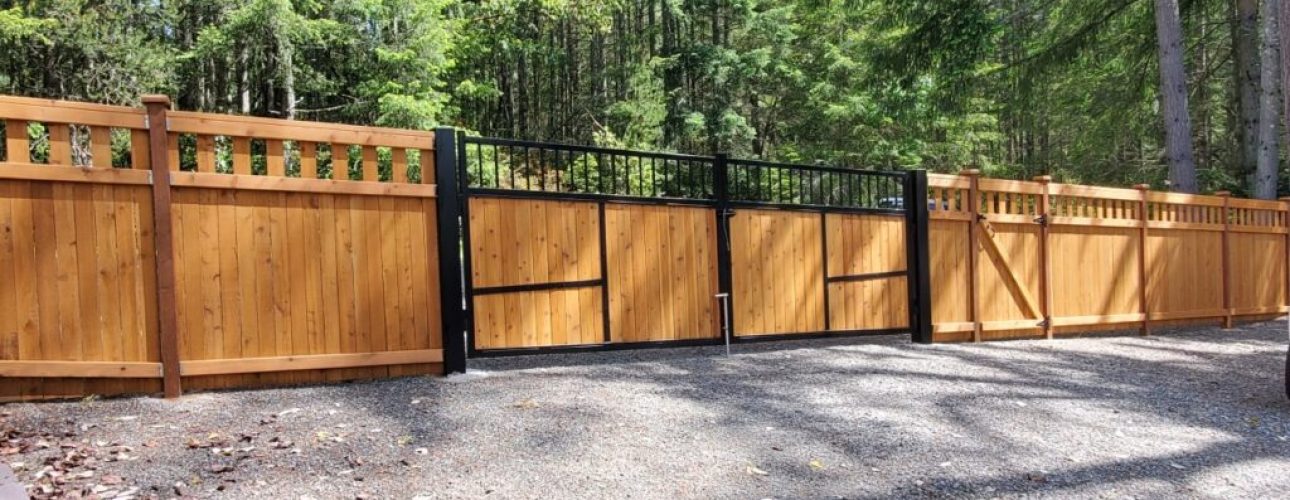
Cedar fencing is a sensible choice for many homeowners and has been a popular option for decades for good reason. The wood looks great, withstands the weather, and does the job whether the goal is privacy, security, or simply a cleaner-looking yard. As a reliable cedar fencing installer, Goodrow’s Fence & Deck builds cedar fences in a range of styles, and this page walks through what makes the material worth the price, what to expect from it, and how to keep it looking good for years.
(253) 219-6682
Call Us
Contact Us
- No Spam
- Free Quote
- Fast Response

We accept all cash, checks, and all credit cards
Free Estimate
Quality Materials
Automated Gates
Temporary Dog Kennels
Why Cedar Holds Up the Way It Does
Most wood rots. That is the short version of why people care so much about the type of lumber going into a fence. Cedar is different because it produces natural oils that resist rot, decay, and insects without chemical help. A lot of cheaper fencing relies on treated wood to provide that protection, with the lumber soaked in preservatives to slow decay. Cedar gets there on its own. That matters when posts and boards are sitting out in damp weather month after month, since moisture is what breaks down most fences from the bottom up. With cedar, the material is doing a lot of the work for you, which is a big part of why it tends to last.
Western Red Cedar and Why the Species Matters
Not all cedar is the same, and the grade and species make a real difference in how a fence performs. Western red cedar is the one most people in the fencing industry point to when they talk about quality, and it is what we build with. It takes stains well if a homeowner wants to shift or hold the color, and the grain has a warm, even look that many people want in a wood fence in the first place. As a softwood, cedar is also known for being dimensionally stable, meaning it tends to keep its shape reasonably well as it dries and weathers compared to some other woods. None of that makes any wood fully maintenance-free, but it does explain why cedar keeps appearing at the top of the list when homeowners compare fencing materials.
Cedar Fence Styles That Fit Different Yards
One reason cedar stays so popular is the variety of styles you can build with it. The right design depends on the look a family is after and what the fence actually needs to do. Here are the main options:
Basic privacy, with boards set tight together to block sightlines and give a yard a fully enclosed feel
Kirkland style, a cleaner take on privacy that a lot of homeowners like for the front-facing sides of a property
Lattice top, which keeps privacy down low but lets a little light through up high for a softer look
Traditional, a classic profile that fits older homes and established neighborhoods well
Traditional, a classic profile that fits older homes and established neighborhoods well
Each style uses the same dependable material, so the choice really comes down to appearance, the level of privacy you want, and how the fence will fit the rest of the yard.
Grades, Boards, and What Real Quality Looks Like
Here is where many fences quietly go wrong. Two cedar fences can look similar on day one and age completely differently, and most of that comes down to the boards, the posts, and how everything is cut and set. Lower grades of cedar tend to have more knots and weak spots that can crack or split. The posts are arguably more crucial than the boards, since a fence is only as straight as its supports. Setting posts properly, at the right depth and with solid footing, is what keeps a fence from leaning a year or two down the road. Skipping that step is a common way some contractors cut corners to land a lower price, and it is precisely the kind of thing that contributes to early failure. Solid materials and careful work at the posts are what separate a fence that lasts from one that turns into a headache.
Cedar Compared to Other Fencing Materials
Cedar isn’t the only way to build a fence, and being honest about that is more useful than pretending it always wins. Compared to vinyl fencing, cedar offers more styles, a natural wood look, and, often, a slightly lower upfront cost, but it does require some care to stay at its best. Vinyl needs almost no maintenance and holds its color, though the design options are more limited, and it can cost more to start. Treated pine runs cheaper than cedar but usually does not match it for appearance or lifespan. None of these is the single right answer for every yard. The best fit depends on budget, the look you want, how much upkeep you are willing to do, and what you need the fence to handle day-to-day, whether that is keeping pets in or adding a layer of security.
Care That Keeps a Cedar Fence Going for Years
Cedar does most of the work, but it requires some maintenance, and anyone who says otherwise is overselling. Left totally alone, the wood will fade to a soft silver-gray over time, and some homeowners actually like that weathered look. If you want to hold on to the warmer, original tone, a coat of stain or sealer every few years will maintain it and add another layer of protection against moisture. The basic routine is simple: keep an eye on the boards, rinse off built-up dirt now and then, and re-stain when the color starts to go. Do that, and a western red cedar fence will typically last 20 years or more. The care it requires is minimal, and it is a small trade for the natural beauty and lifespan you get in return.
Getting a Cedar Fence Built
Every yard is a little different, so the best starting point is a free estimate that measures and prices the project for what it actually needs. Goodrow’s Fence & Deck is veteran-owned and holds a BBB A+ rating, and the price we quote is the price you pay, even when a job turns out harder than expected. Homeowners considering their options are welcome to have our team walk through the trade-offs honestly, and anyone looking at cedar fencing in Tacoma, WA, will find the same straightforward approach close to home. You can request a no-obligation estimate through our contact page or by calling (253) 219-6682. If you’re considering adding a deck or other carpentry work, we can combine it into one project so you don’t have to coordinate two crews.