

University Place sits just west of Tacoma, and while the two cities share a border, their fence regulations differ in meaningful ways if you’re planning a fence project. If you’re working with a top-rated fencing company in Tacoma, WA, or considering professional fence installers for your University Place property, it’s worth knowing that applying Tacoma’s rules to UP can lead to costly mistakes. Discovering code violations after installation is far more expensive than verifying requirements upfront.
How University Place Sets Its Rules
Washington state doesn’t establish universal fence height limits. Each city sets its own standards through local zoning ordinances, and those standards can vary not just between cities but between zones within a single city. University Place applies different height standards to front yards than it does to rear and side yards, and certain overlay zones within the city add material and design requirements on top of the baseline limits.
Knowing your specific zone before you plan matters. The rules aren’t the same across all residential parcels in University Place, and a requirement that applies to one neighborhood may not apply to the one next door.
Front Yard Height Limits
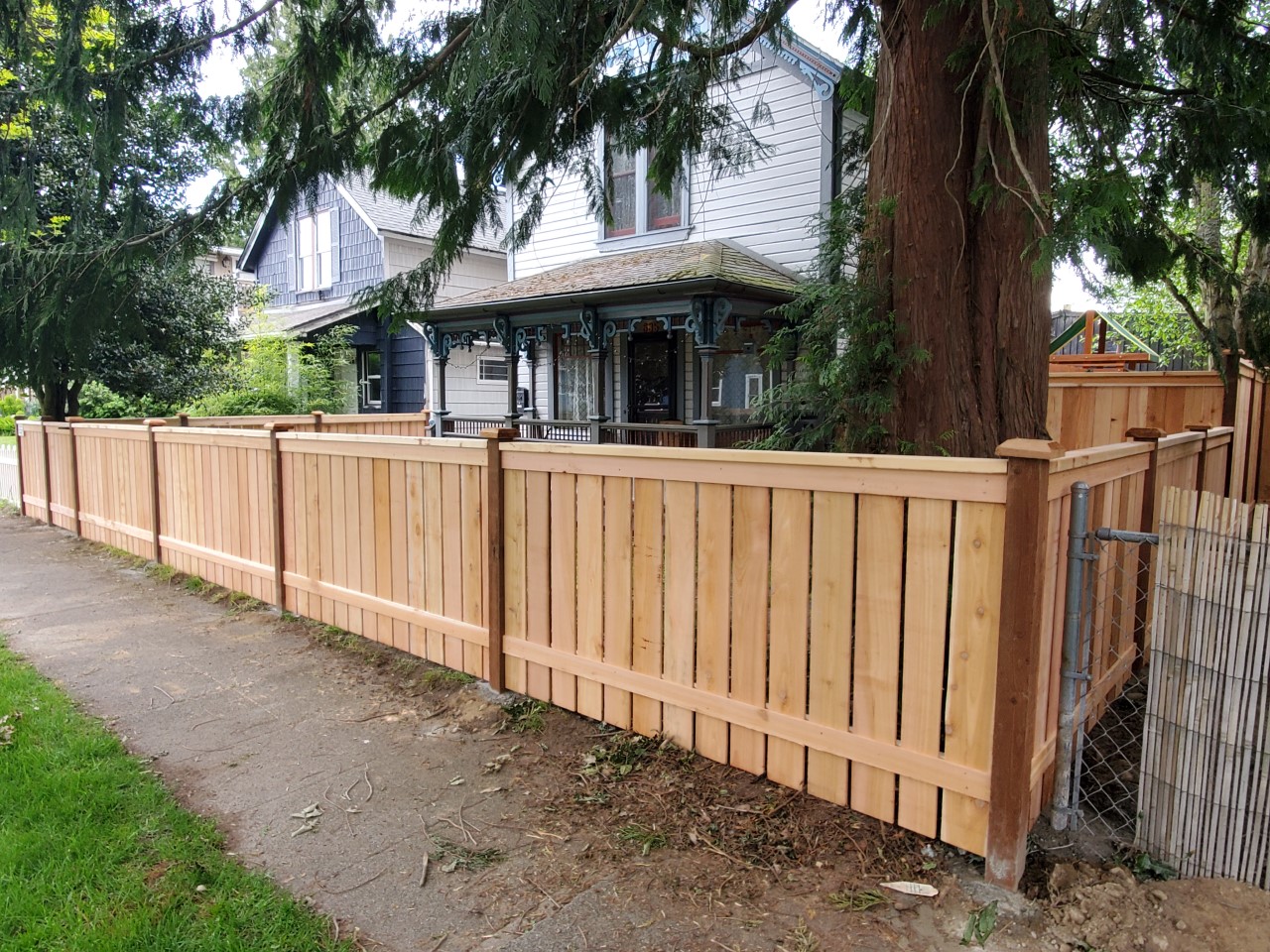
Front yard fences in University Place are limited to 4 feet in height within the required front yard setback. That’s the standard across residential zones throughout the city, and it’s a real constraint if you’re planning to run a 6-foot fence around the full perimeter of your property.
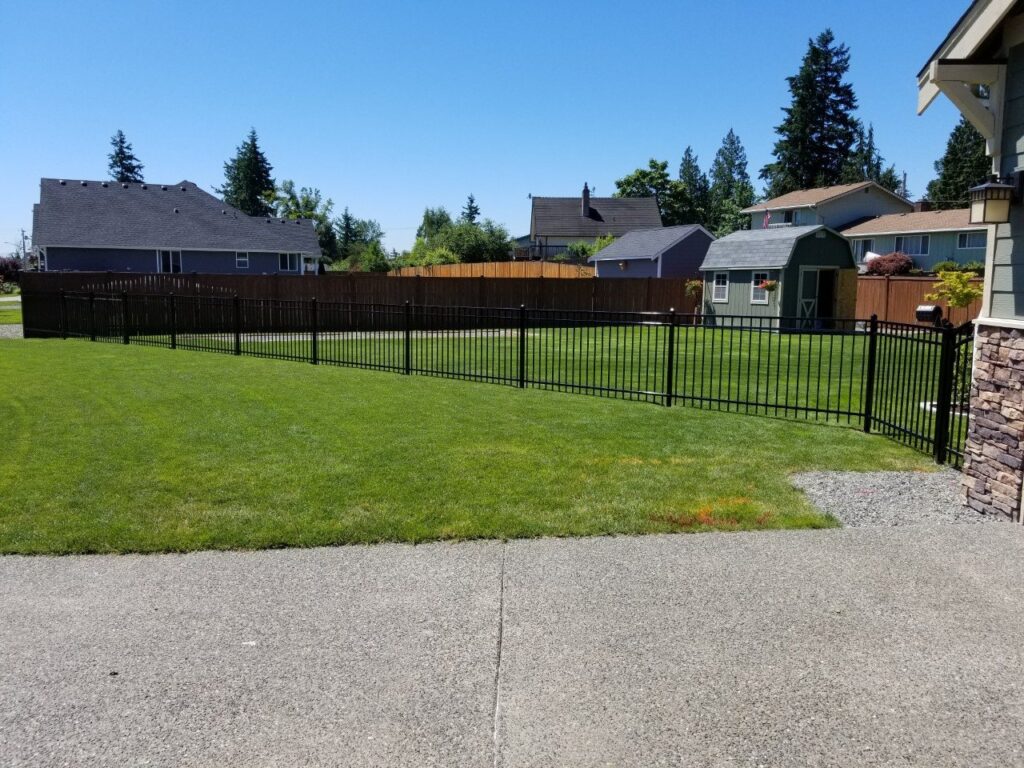
The height limit is only part of the story for front yards in certain parts of University Place. In some overlay zones, front yard fences must be decorative rather than solid privacy fences. A board-on-board cedar privacy fence or a solid vinyl panel fence isn’t permitted in those areas. University Place’s code specifies that front yard fences in those zones must be constructed of wood, simulated wood, iron, masonry, or steel picket styles, while specifically prohibiting solid privacy fences, vinyl panels, and chain link in front yard locations.
This is the part that catches homeowners off guard. The height limit is one thing. The material and style restrictions in certain parts of University Place go further than most people expect. If you’re unsure whether your parcel falls under these overlay standards, confirming with University Place’s planning department before ordering materials is worth doing.
Rear Yard and Side Yard Height Limits
Rear and side yard fences in University Place are permitted up to 6 feet within required setbacks. Six feet is the standard residential privacy fence height and covers most backyard fence projects in the city.
The situation gets more specific for fences sitting on or near retaining walls or berms. University Place applies a combined height limit in those cases: the total height of a fence on top of a retaining wall or berm, measured from the base of the wall to the top of the fence, is restricted rather than measuring only the fence itself. On sloped properties where a fence runs along a retaining wall, that combined measurement can limit what’s buildable even when a freestanding 6-foot fence would otherwise be allowed.
Property Line Rules and Setback Requirements
Height limits address how tall the fence can be. Setback rules and property line placement address where it can sit. University Place allows fences within required yard setbacks up to the applicable height limits, but fences outside of required yards fall under zone-specific height standards, which can differ from the yard-specific limits.
Property line placement is a separate practical question. Placing a fence on or close to the property boundary requires knowing where that boundary actually is. Assumed corners, decades-old stakes, and adjacent fences are not reliable references. The only way to confirm a property line with certainty in University Place, or anywhere in Pierce County, is through a licensed boundary survey. A fence placed on an assumed line that turns out to sit on a neighbor’s property is the fence owner’s problem to correct, at the fence owner’s cost.
Common Ways Violations Happen
Most fence violations in University Place come from planning with incomplete information about which rules apply to a specific parcel, not from deliberate decisions to push past the code.
Installing a solid privacy fence in a front yard zone that only permits decorative styles is among the most frequent issues. Exceeding the 4-foot front yard limit because the homeowner was working from a general sense of what’s normal, or from Tacoma’s different standards, is another. Corner lots in University Place carry sight-line restrictions near intersections that can limit height and placement in sections of the fence line that wouldn’t be affected on a standard mid-block lot.
The most direct way to avoid any of these is to confirm the applicable rules for your specific parcel before buying materials. University Place’s planning department can confirm your zone and what applies. A licensed surveyor can confirm the property boundaries. Working with a contractor who has active experience in Pierce County means those details get caught at the estimate stage rather than after the fence is already in the ground.
What We Do Before We Build in University Place
Before any post goes in the ground on a University Place project, we work through what the code allows for that specific property: the zone, the fence placement relative to front and rear yard setbacks, the height limits, and any material or design restrictions.
At Goodrow’s Fence & Deck, we’re a veteran-owned contractor that has been operating in Pierce County and Thurston County since 2006. We hold a BBB A+ rating and won the 2023 Angi Super Service Award. We install cedar fencing, vinyl fencing, ornamental iron fencing, and other materials throughout the area, and we give customers accurate information about what’s actually allowed before we build.
Related Topics: