

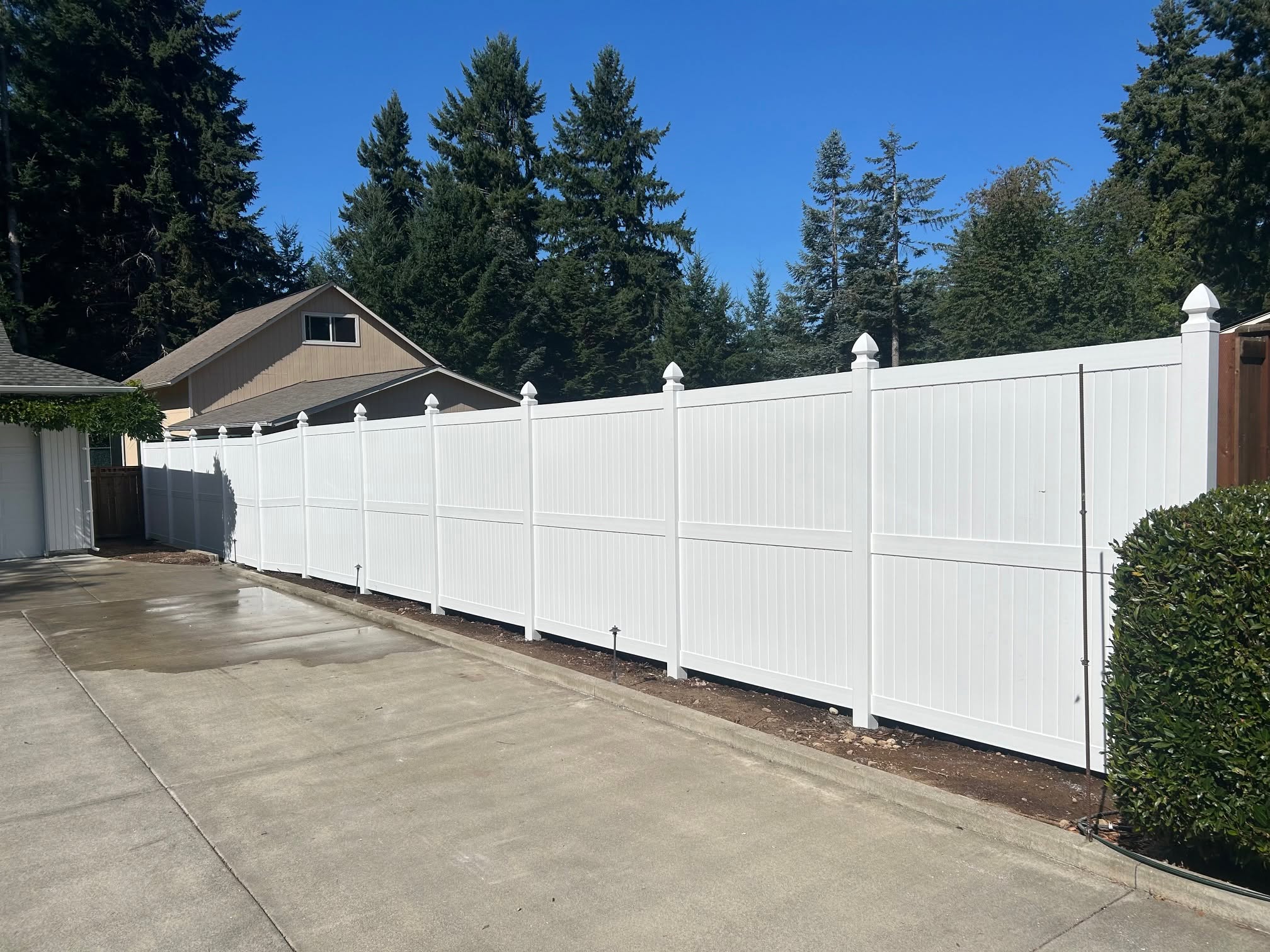
Yes, most fences can be repaired rather than replaced. The real question is how much of the fence line is actually affected, not just what you noticed from the driveway. Fence contractors generally work off a rough 20% threshold, and once about a fifth of the fence needs attention, replacement starts making more financial sense than another patch job.
We’re a trusted Tacoma fence company, veteran-owned, and our crew has been repairing and building fences across Pierce and Thurston County for more than 17 years now. Every repair estimate we give starts with a walk of the entire fence line, not just the section you called about.
That might sound like overkill for one bad post, but it’s actually what separates a quick fix from a fence that’s quietly failing along its whole length.
What Decides Whether a Fence Can Be Repaired?
Three things settle it for us, and we check them in the same order every time, no shortcuts. One is how much of the fence line actually shows damage, because scattered problems point to a different cause than one concentrated failure.
Another is whether the posts still hold, since posts carry every panel and every gate hanging off them. Then there’s the fence’s age compared with how long cedar lasts in this climate, which tells you whether a repair buys you years or just a few extra months.
A fence with one leaning section and forty feet of solid, plumb posts is a repair, usually a short one. A fence where posts wobble at three separate points is telling you something different, that the failure is systemic. Patching one spot just means the next call comes in a season or two.
Damage that clusters in one area almost always has one cause, like a vehicle, a fallen limb, or a downspout draining against a post, while damage spreads evenly across the run points at age, soil, or the original installation, and none of those get solved by replacing a few boards.
Which Fence Problems Are Repairable, and Which Are Not?
Board and panel damage is the easiest category to fix, honestly. Individual boards from cedar fencing pull out and go back in without disturbing the structure around them. Loose pickets, cracked vinyl panels, and bent chain link sections all fall into the repair column too.
Surface rust on ornamental iron counts, and so does a dropped driveway gate that drags on the concrete. A single rotted post is fine to fix on its own, as long as its neighbors are still sound. We handle these as targeted repairs and reuse whatever’s still good, because there’s really no reason to send decent wood to the dump.
The problems that push a fence toward replacement are structural and repeat. Here’s what we look for when the answer is heading that way:
- Multiple posts failing along the run, rather than one isolated post
- Rot that has reached the rails and the panel bases, not only the boards
- A fence that has already been repaired more than once in the same few years
- Leaning that returns after a post was reset
- Material at the end of its service life, where new boards sit against gray, cupped ones
Two or more of those at once, and the money you spend on another repair is money you’ll spend again later anyway.
How Do We Check Whether Fence Posts Are Still Sound?
Posts tend to fail right at the ground line, which is the one part almost nobody actually inspects. We push the post firmly at shoulder height and watch the base rather than the top, since that’s where the real story is. A post that pivots at grade has lost its bearing even when the wood above still looks fine.
Then we probe the wood right at the soil line with a screwdriver, nothing fancy. Sound cedar resists the tip, kind of like knocking on solid wood should. Rotted cedar takes it like a sponge, and honestly, that gives us the answer in about four seconds.
You can actually run this same check yourself before anyone quotes you, and we’d rather you did. Walk the line and push one post out of every three or so, just to get a feel for it. Any post that moves, or any post where the screwdriver sinks more than a quarter inch at grade, goes on your list.
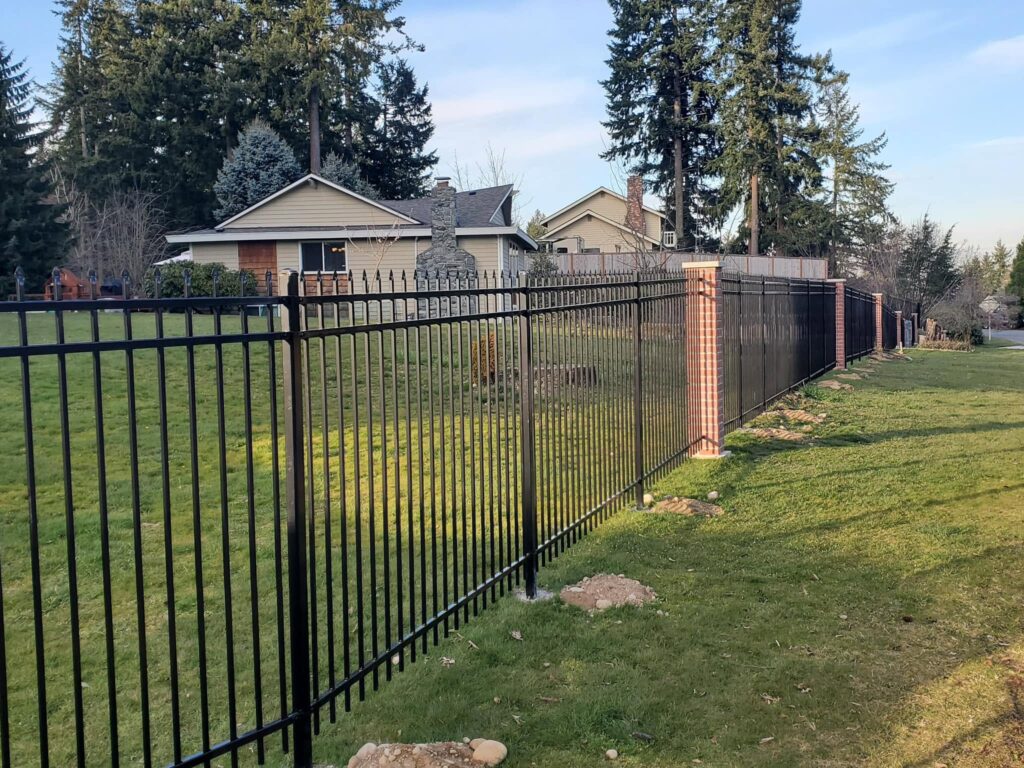
Count those against the total number of posts in the fence. If more than one in five is soft or loose, you’re looking at a replacement conversation, not a repair one.
Any contractor who quotes a cheap patch without actually checking the posts hasn’t looked at your fence properly, and if it does turn out to be a replacement, don’t worry, we remove old fences as part of the job too, so that’s never something you have to deal with on your own.
Noticed a post that wobbles when you push it, or a section that’s started to lean? Give us a call at (253) 219-6682, and we’ll take a look before it turns into a bigger problem.
Is Repairing a Fence Cheaper Than Replacing It?
In the short term, almost always. A repair touches one section, uses a fraction of the material, and finishes in a day. The invoice lands well below a full replacement, so for storm damage on twenty feet of an otherwise healthy fence, repair is clearly the right call. It’s what we recommend, most of the time.
The comparison changes once repairs start repeating. Three repair visits across four years will usually cost more than one replacement would have, and honestly, you also spend those four years with a fence you don’t quite trust.
The real question isn’t which invoice is smaller today, it’s how many more times you expect to make this call. When a customer tells us they’ve already reset two posts themselves, we say so plainly, because we’d rather lose a small repair job than take money for work that fails again by spring.
A free on-site estimate settles which side of that line your fence sits on. There’s no obligation, and we’ll say plainly if a repair is the better use of your money.
When Does Replacing Make More Sense Than Another Repair?
Replacement earns its cost when the fence has stopped being a set of parts and started being a worn-out system. Once rot has moved from the boards into the rails, new boards have nothing solid to fasten to, and the repair fails at the fastener rather than the wood.
The same thing happens when posts start going one after another, since each reset disturbs the soil around the next one.
Age is the other trigger. Cedar in this climate has a working life, and a fence at the far end of it keeps producing problems no matter how carefully each one gets fixed. The clearest tell is visual, honestly: if replacement boards look obviously new against the rest, the rest is telling you what it needs.
A fence at year eight and a fence at year eighteen deserve different answers, and when replacement is the call, removing the old fence is part of what we handle, so the old material never becomes your problem.
How Does Tacoma’s Climate Change the Repair Decision?
Wet winters in Tacoma, WA, keep soil saturated for months at a time. That saturated soil holds moisture against the base of every post through the stretch of the year when the wood can’t dry out.
Fences in Pierce County fail from the ground up rather than the top down because of it, which is why a fence that looks perfect at eye level can be finished at grade. Homeowners are often surprised when we point at a post that looks fine and tell them it’s gone.
It also means repairs done here need to account for drainage, not just carpentry. Setting a new post into the same hole that rotted the last one, with the same water running in, buys a few years at best.
When we repair posts, we look at where the water’s coming from first, then set the replacement to clear the wet zone. Western red cedar helps some, since its natural oils resist moisture better than untreated wood, but no material outruns standing water at the post base.
Frequently Asked Questions
These are the questions homeowners raise most often once we’ve walked the fence line with them. The answers apply to wood, vinyl, and chain link alike, unless a material is named.
Around 20% is the working threshold most fence contractors use. Below that, targeted repairs usually make financial sense. Above it, the cost of repeated repairs starts closing in on the cost of a new fence, and the percentage matters less than what’s damaged, since a fifth of the posts is far more serious than a fifth of the boards.
Yes, provided the posts on either side are sound and the rails are still solid. We pull the failed post, clear the old concrete, and set a new one so the panels can be rehung. If the neighboring posts are also soft at grade, replacing one just moves the problem along the fence line by a few feet.
Usually, though not always. Leaning starts at the base and points to a post that’s rotted or shifted in soft ground. Leaning that appears after a storm, with the posts still plumb, often means fasteners or rails have let go, and we check the base first because that’s where the expensive answer tends to hide.
New cedar will look noticeably lighter than weathered cedar for the first year or two before it grays and blends in. On vinyl and chain link, the match is much closer. If an exact match matters to you, say so at the estimate, and we’ll talk through the options before any work starts.
Get a Repair Assessment in Tacoma
If your fence is leaning, rotting at the base, or missing sections after a storm, we’ll come out and walk the full line at no charge. Then we’ll tell you straight whether it needs a repair or a full replacement.
Call us at (253) 219-6682, Monday through Friday, 8:00 AM to 5:00 PM, or contact us online, and we’ll get back to you. We schedule free on-site visits across Tacoma, WA, and the rest of Pierce and Thurston County.
Related Topics: