

Chain link fencing makes solid sense for Pierce County properties. It withstands Washington’s rainfall, covers large areas affordably, and requires little maintenance. The downside is zero visual privacy. If you want to add privacy to existing chain link without replacing it, several methods work well in our climate.
As a reliable chain link fence company, we’ve served Tacoma, Puyallup, Spanaway, South Hill, and Lakewood since 2006. What works best depends on your goals, budget, and whether you need a temporary or permanent solution. Our reliable chain link fence installers can help you find the right approach.
Privacy Slats
Privacy slats are the most common upgrade we see requested for chain link fences in this area. They thread through the diamond openings in the mesh, filling in the gaps and reducing visibility from outside the fence line.
The material used in most residential applications is PVC or polypropylene. Standard vertical slats slide through the mesh and lock at the bottom, providing roughly 75 to 85 percent visual coverage depending on the slat profile. Winged slats are a step up from that, designed with a wider flange that presses against the wire on both sides. They block closer to 90 to 95 percent of the view and hold more securely in wind. At the high end, four-wing top-locking designs get close to full visual screening and are rated for the kind of sustained gusts that Pierce County sees in fall and winter.
One thing to set realistic expectations around: slat coverage is measured as a percentage of visual blocking, not a solid wall. If you’re expecting the finished result to look like a wood privacy fence, slats won’t deliver that. For a backyard, a dog run, or a commercial perimeter where the goal is reduced visibility and you want something that stays in place across multiple seasons, slats are a solid choice.
Mesh Screening and Privacy Fabric
Privacy mesh attaches to the outside of the fence using grommets and zip ties. It’s a woven synthetic fabric, typically polyethylene, that comes in a range from semi-transparent to nearly opaque.
The main advantage here is installation speed and upfront cost. Mesh goes up faster than slats, and the material is less expensive, which is why it shows up on construction sites, sports courts, and commercial perimeters across Tacoma. The trade-off is durability. In the Pacific Northwest, consistent rain, UV exposure, and wind wear on mesh fabric more aggressively than in drier climates. Products with UV inhibitors built in hold up noticeably better, but mesh screening is still the shorter-term option compared to rigid slats.
If the fence serves a temporary purpose, if replacement is already in the plans within a few years, or if the goal is quick coverage rather than a long-term solution, mesh is a reasonable fit. If you want something that holds up for years without much attention, other options serve you better here.
Privacy Panels
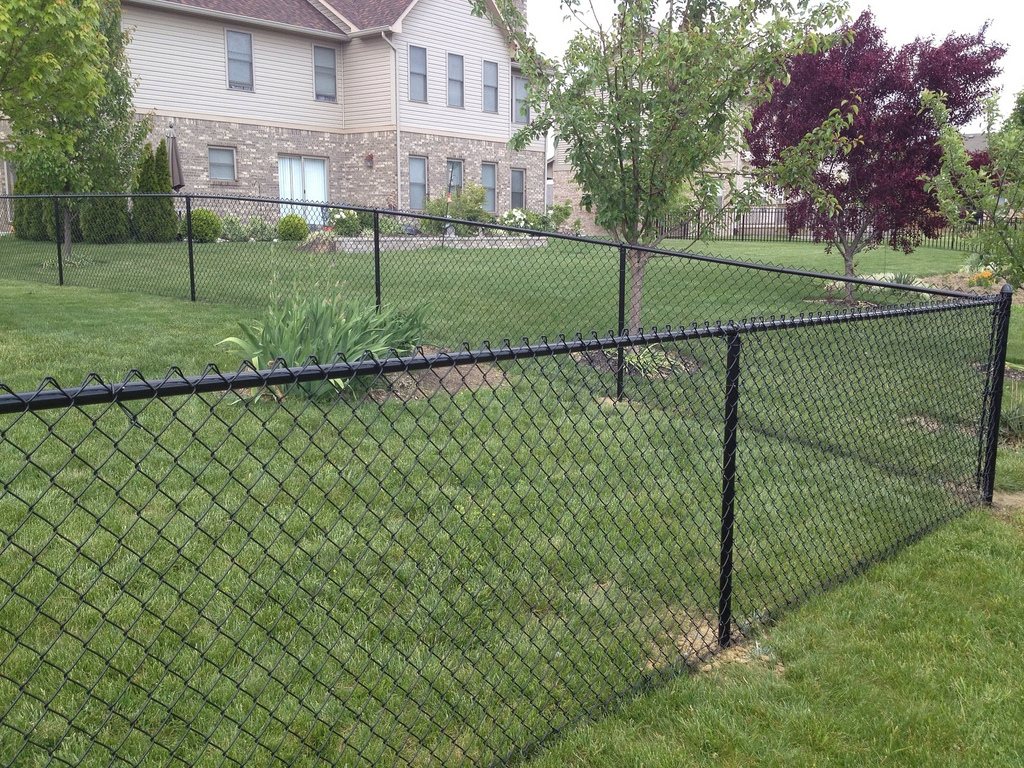
Privacy panels are a more substantial upgrade than slats or mesh. Rather than threading material through the existing mesh, panels attach directly to the fence posts and cover the full bay between them.
Options range from wood lattice and bamboo panels to purpose-built metal or vinyl inserts designed for chain link frameworks. A well-installed composite panel on solid chain link posts can read significantly closer to a traditional fence than slats or fabric achieve. The installation is more involved and costs more, but for homeowners who want a clean, durable result from an existing structure, panels are worth the comparison.
Bamboo gets mentioned as a natural-looking alternative. It works well in drier climates. In the Pacific Northwest, sustained moisture ages bamboo panels faster than vinyl or metal options, which means more maintenance and shorter replacement cycles. If longevity is part of what you’re factoring in, that’s worth knowing before bamboo becomes the choice.
When to Upgrade vs. When to Replace
Adding privacy upgrades to a chain link fence makes sense when the fence itself is structurally sound. If the posts are set correctly, the mesh is intact, and the only thing missing is visual screening, an upgrade is a reasonable use of the investment.
The math changes when the fence has real structural issues. Posts that have shifted or corroded, sagging or stretched mesh, rails that are rusting through, or a wire gauge too light to support slats securely, those are signs that putting money into an upgrade is working against you. Spending on slats for a fence that needs replacement extends the problem rather than solving it.
When we come out, we look at the existing fence honestly before recommending anything. If your chain link is in good shape and an upgrade is the right move, we’ll tell you that. If the fence itself is the issue, we say that instead. Todd Smith, a customer who hired us for cedar fence installation in Tacoma, noted in his review: “Goodrows did a fantastic job installing a cedar fence in my backyard. The cost was also very competitive of three quotes I obtained.” That same standard applies to chain link work. We install chain link fencing for residential and commercial properties across Pierce County and Thurston County, and we’re honest about what each situation calls for.
Working With Our Team
At Goodrow’s Fence & Deck, we’re a veteran-owned contractor that has operated in Pierce County since 2006. We hold a BBB A+ rating and won the 2023 Angi Super Service Award based on verified customer reviews. Estimates are free, on-site, and come without pressure to commit.
Related Topics: