

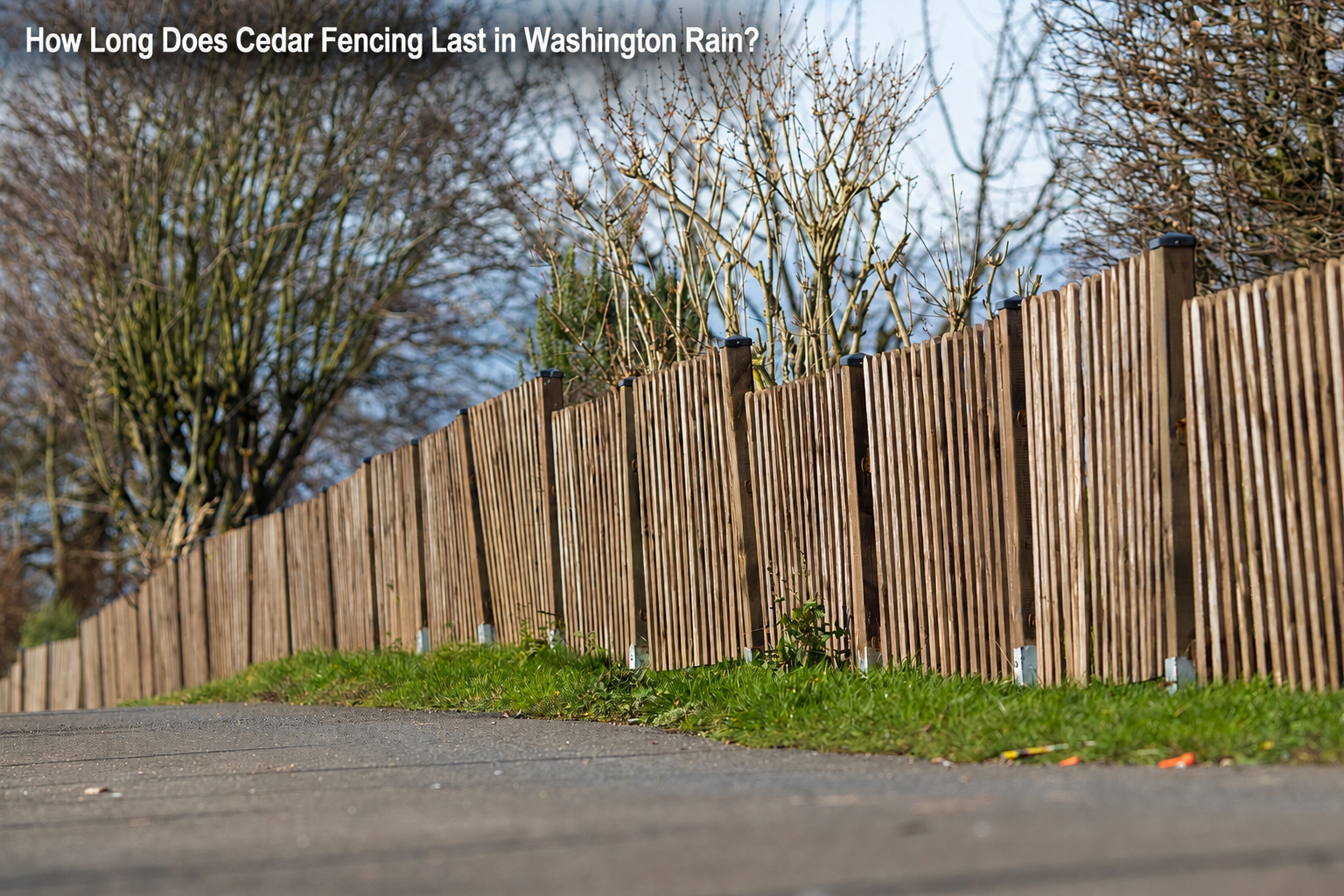
Western red cedar is a common fence choice in Washington because it handles wet weather better than many other woods. In the Tacoma area, a well-built cedar fence can last 20 years or more with basic upkeep. How long it actually lasts depends on the installation, drainage, sun exposure, soil conditions, and whether the fence is cleaned and sealed over time.
A reliable fence company in Tacoma, WA, will pay close attention to the details that matter in this climate, especially post setting, ground contact, and airflow around the boards. Rain is part of life here, but poor drainage and neglected maintenance are what usually shorten a cedar fence’s lifespan. With the right installation and occasional care, cedar can stay strong and good-looking for many years.
Why Western Red Cedar Handles Washington Rain Better Than Other Woods
Western red cedar’s durability in wet conditions comes from the wood itself, not from chemical additives. Cedar contains natural oils and resins that repel moisture and resist rot and insects without treatment. That matters in a climate like Tacoma’s, where fence boards and posts can stay wet for weeks at a stretch during the rainy season.
Pine absorbs moisture readily. Without chemical pressure treatment, a pine fence in western Washington deteriorates significantly faster than cedar under identical conditions. Even pressure-treated pine does not match cedar’s long-term performance in high-rainfall environments. Cedar handles Washington’s climate naturally, which is why it has been the dominant wood fencing choice in the Pacific Northwest for decades.
How Long Cedar Fencing Actually Lasts in Washington
A properly installed cedar fence in Washington state typically lasts 20 or more years. That figure assumes correct post depth, concrete footings, proper drainage around the base, and periodic maintenance such as sealing or staining every three to five years.
Without any maintenance, cedar will still outlast pine in this climate, but the lifespan shortens. A cedar fence with no sealing or upkeep in western Washington will typically show significant graying, cracking, and base rot somewhere between 12 and 15 years. The material is forgiving, but it is not maintenance-free.
The 20-plus-year lifespan is achievable for homeowners who treat the fence within the first year and reseal it periodically. That is not a marketing claim. It is what the material does when installed and maintained correctly.
What Shortens Cedar Fence Lifespan in Western Washington
Several factors reduce how long a cedar fence performs, and most point back to installation quality.
Shallow post depth is the leading cause of early fence failure in Pierce County. Washington’s saturated soil provides much less structural resistance than dry, compacted ground. Posts set too shallowly shift and lean as the ground moves through wet and dry cycles. Once a post loses its footing, the fence section follows. Posts need to be set below the frost line and anchored with concrete footings to remain stable.
Ground contact at the base of fence boards is the second common problem. When boards sit directly on soil or trap moisture at the base, rot moves upward through the wood from the bottom. Good installation keeps boards off direct ground contact and accounts for how water drains along the fence line.
Standing water along the fence base also speeds decay. Properties with poor drainage push water against posts and boards for extended periods after rain. A contractor familiar with Pierce County’s conditions will address drainage during installation rather than leaving the homeowner to manage it later.
Does Staining or Sealing a Cedar Fence Actually Help?
Yes. The difference between a sealed and unsealed cedar fence in Washington’s climate is visible and measurable over time.
A bare cedar fence will begin to gray within the first year as the surface weathers and the wood’s natural oils deplete. As the surface opens up, moisture absorption increases. Applying a penetrating stain or sealant within the first year of installation, before significant weathering occurs, is the single most effective maintenance step a homeowner can take.
Reapplication every three to five years keeps the protection active. The right product depends on how much direct sun and rain exposure the fence receives and the homeowner’s preference for appearance.
Cedar vs. Vinyl for Washington’s Climate
Both cedar and vinyl hold up well in Washington’s wet climate, but they perform differently and suit different priorities.
Cedar offers a wider range of style options and a natural wood appearance. We install cedar in five styles: basic, Kirkland, lattice top, traditional, and horizontal. Cedar requires periodic maintenance. The trade-off for the appearance and design options is the sealing every few years and the possibility of board replacement over the fence’s life.
Vinyl fencing holds its color without painting or staining and requires almost no upkeep after installation. The trade-off is fewer design choices and a different aesthetic that works well for some properties and less well for others.
Neither material is the wrong choice. The right one depends on whether natural appearance with maintenance requirements or low maintenance with fewer style options matters more to the homeowner.
Why Installation Quality Determines How Long Cedar Lasts
The material alone does not determine lifespan. A cedar fence installed with shallow posts, poor footings, or inadequate drainage will fail faster than the material warrants, regardless of cedar’s natural properties.
We have installed 500-plus fences across Spanaway, Puyallup, South Hill, Tacoma, Lakewood, and surrounding communities since 2006. In that time, we have worked in rocky soil in parts of Pierce County where post-installation requires more labor than a standard lot. We have worked on sloped yards in South Hill where drainage needs to be managed from the start. Local experience changes how installation decisions get made.
Installation shortcuts are not visible once the fence is up. They show up two or three years later as leaning posts or rotting at the base. Getting the installation right the first time is what produces the 20-plus-year lifespan cedar is capable of.
Frequently Asked Questions
How long does a cedar fence last without any maintenance? Without sealing or staining, a western red cedar fence in Washington typically lasts 12 to 15 years before showing significant graying, cracking, or base rot. Periodic maintenance extends that lifespan to 20 years or more.
Does cedar fencing need to be sealed in Washington state? Cedar does not require sealing to survive in Washington’s climate, but sealing significantly extends its lifespan and keeps the wood looking better over time. The most impactful application is the first one, done within the first year of installation, before the surface weathers.
What is the best wood for fencing in the Pacific Northwest? Western red cedar is the top choice for wood fencing in the Pacific Northwest. Its natural oils resist moisture, rot, and insects without chemical treatment, which is a practical advantage in a region with high annual rainfall and sustained wet seasons.
How deep should cedar fence posts be set in Washington? Posts should be set below the frost line, typically at least 24 to 36 inches deep, depending on post height and site conditions. Concrete footings are standard practice in western Washington’s wet, saturated soil to keep posts stable through seasonal ground movement.
How do I know when my cedar fence needs replacement vs. repair? Isolated board damage, faded finish, or gate hardware issues are generally repairable. Leaning or rotted posts, widespread board cracking, or structural movement along the fence line usually point to deeper installation issues. When posts are compromised, replacement is typically more cost-effective than repair.
Do you install cedar fencing in Tacoma and Pierce County? Yes. We install cedar fencing across Tacoma, Spanaway, Puyallup, South Hill, Lakewood, Bonney Lake, and surrounding areas in Pierce County and Thurston County. Cedar is one of our most requested materials, available in five styles.
How does cedar fencing cost compare to vinyl over time? Cedar costs more upfront than vinyl in most cases and carries periodic maintenance costs for sealing over its lifespan. Vinyl has lower ongoing maintenance costs but fewer style options. We provide free on-site estimates for both materials so you can compare options based on your specific project.
Contact Us
Have questions or ready to get started on your fencing, decking, or gate project? We’re here to help! You can reach Goodrow’s Fencing & Landscaping by phone at (253) 219‑6682. Our team is happy to answer your questions, provide a free estimate, and walk you through your options.
Prefer to send a message? There’s a contact form on the website where you can leave your name, email, and a brief message, and someone will get back to you as soon as possible.
Business Hours:
- Monday to Friday: 8:00 AM – 5:00 PM
- Saturday & Sunday: Closed
Whether you’re in Spanaway, Puyallup, or the surrounding areas, we’d love to hear from you and help bring your outdoor project to life.
Related Topics: