

Goodrows Fence & Deck is a veteran-owned team of deck builders serving Tacoma and Pierce County. Owner Will and his crew build new cedar, pressure-treated, and composite decks and replace worn ones under Washington contractor license GOODRFL896OK, with bond and liability coverage on file. Every project starts with a free on-site estimate.
Will stays available from the first consultation through the finished deck, and his crew handles everything from framing to finishing.
Get a straight answer about your deck. Book a free estimate or call to talk through your project.

Western Washington’s long wet season takes a toll on decks. Boards hold moisture, fasteners rust, and framing that never dries out can rot long before the surface shows signs of wear. Watch for these warning signs:
When a board goes soft or a post starts to rock, Goodrows can assess the framing beneath it during a free estimate.
The right design depends on the house, the yard, and how you plan to use the space. Goodrows builds simple ground-level platforms and elevated, multi-level decks.
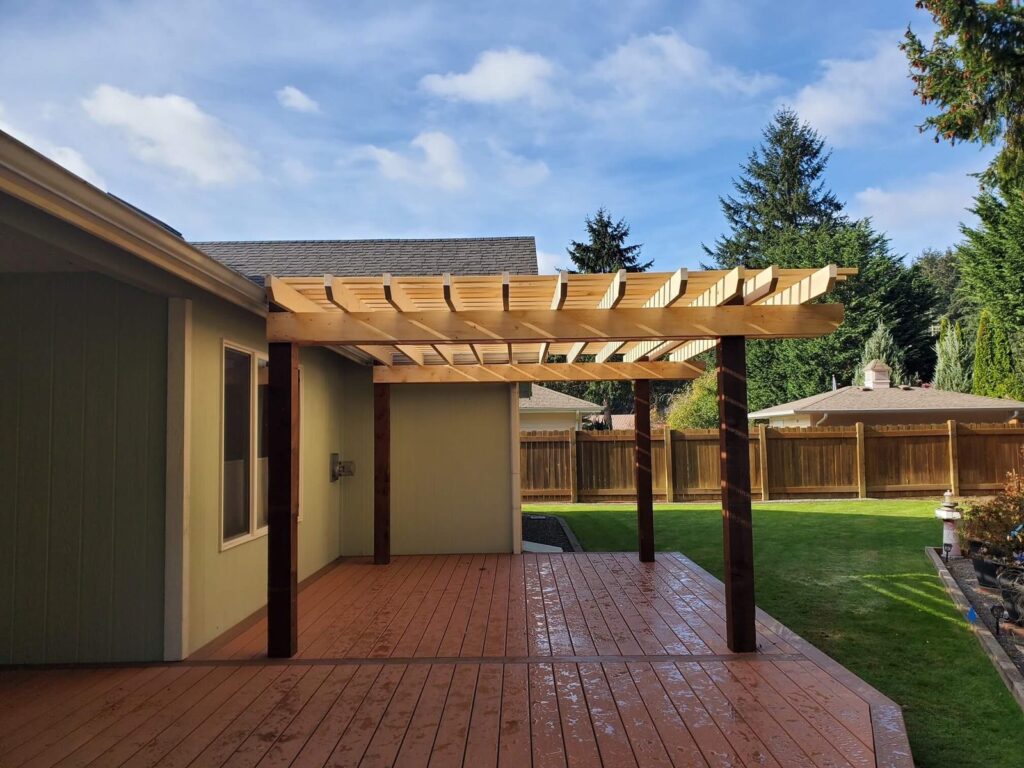
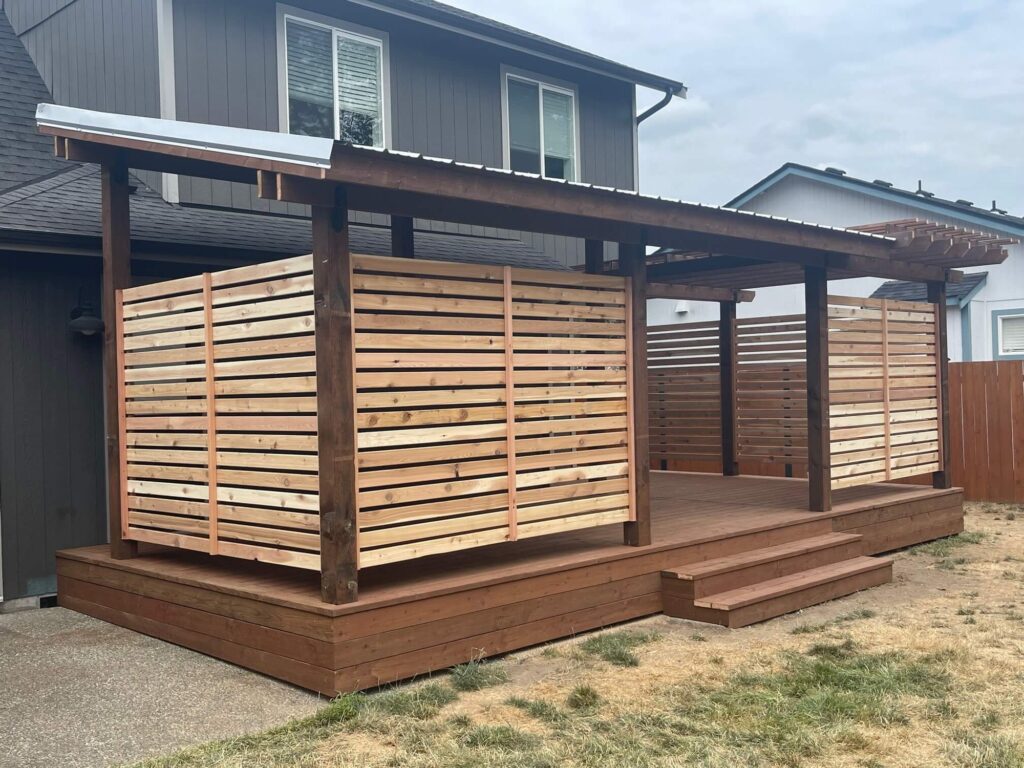
A ground-level deck sits close to grade and turns a soggy patch of lawn or a worn patio into usable outdoor space. Because framing this close to damp soil dries slowly, low decks need lumber rated for ground contact and open gaps around the perimeter to let air move underneath.
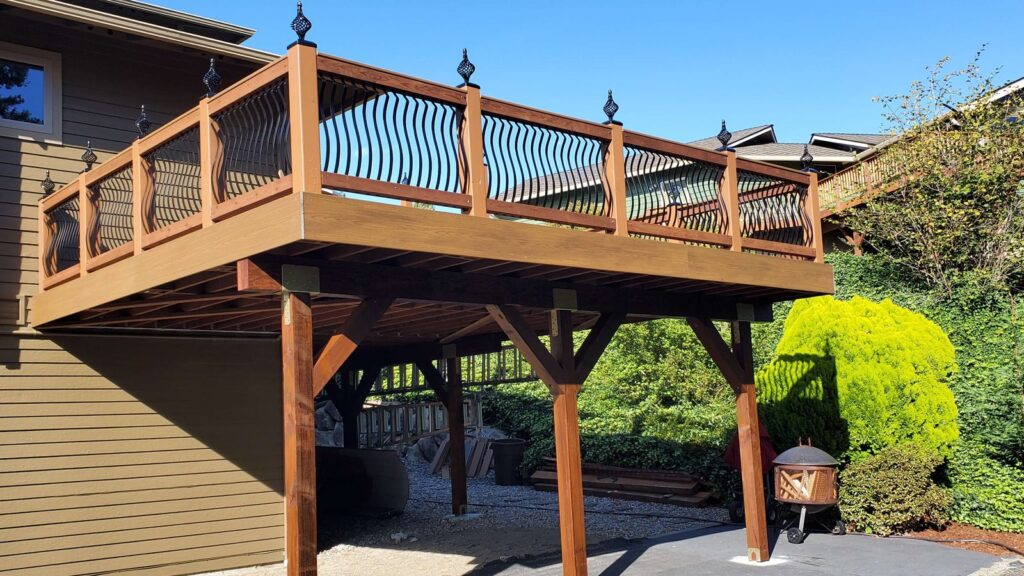
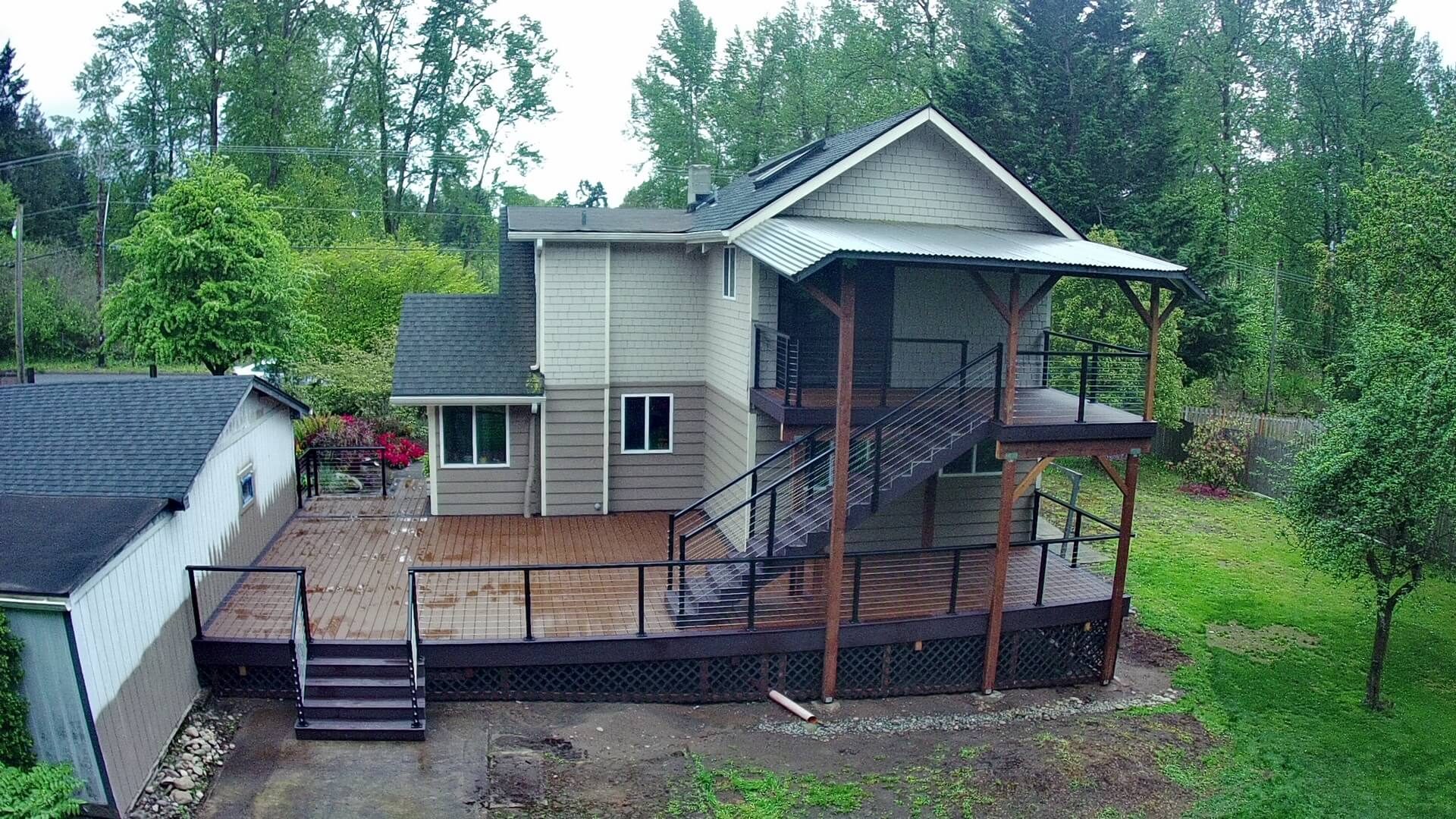
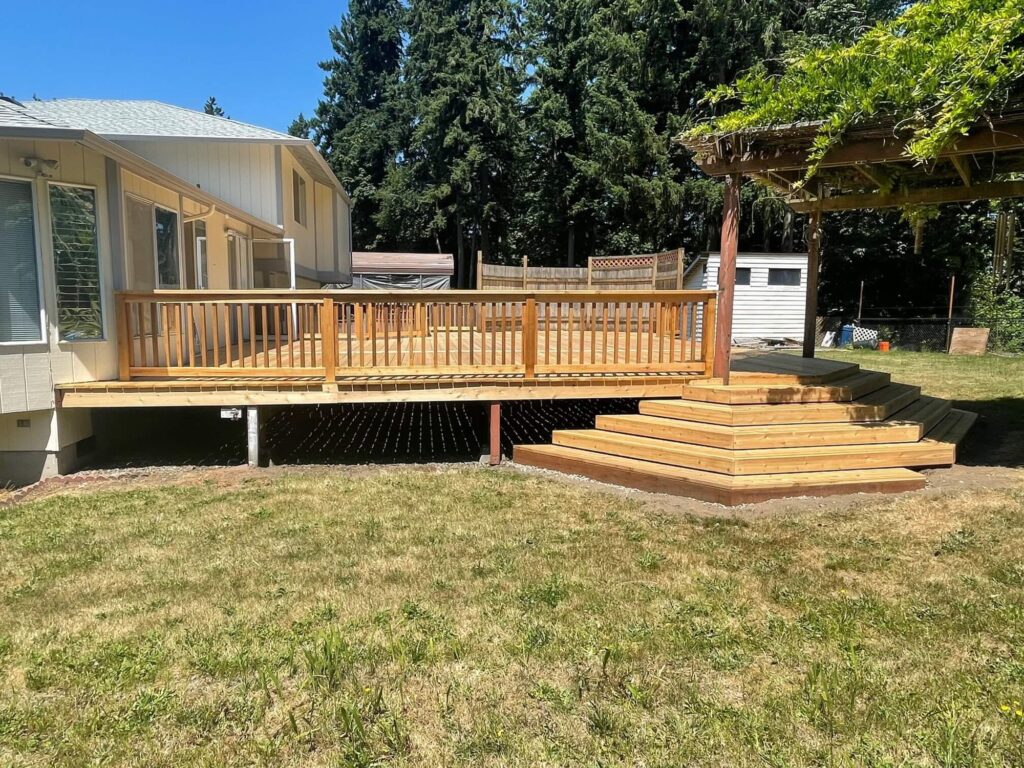
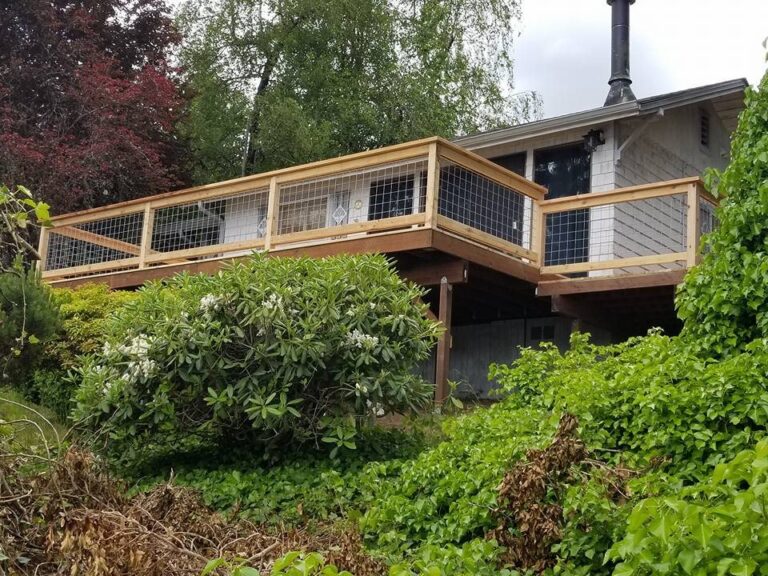
Elevated decks connect an upper floor or a sloped lot to the yard. Multi-level designs split a large deck into zones, such as a dining level by the kitchen door and a lounge level below, joined by wide steps. Height adds demands on footings, beam sizing, bracing, and railings.
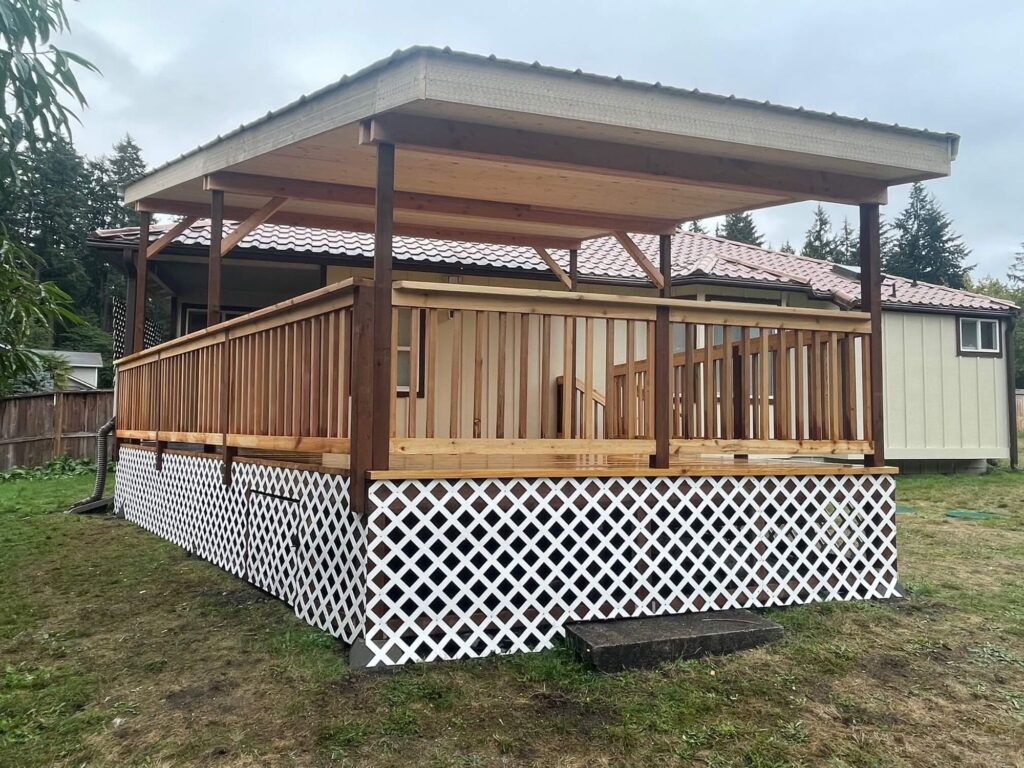
An attached deck bolts to the house through a ledger board and uses the house as one of its supports. A freestanding deck carries its own beams and posts on every side. It avoids opening the siding and works where a wall can’t support a ledger. We assess the house and site during the estimate and help you choose the right design.
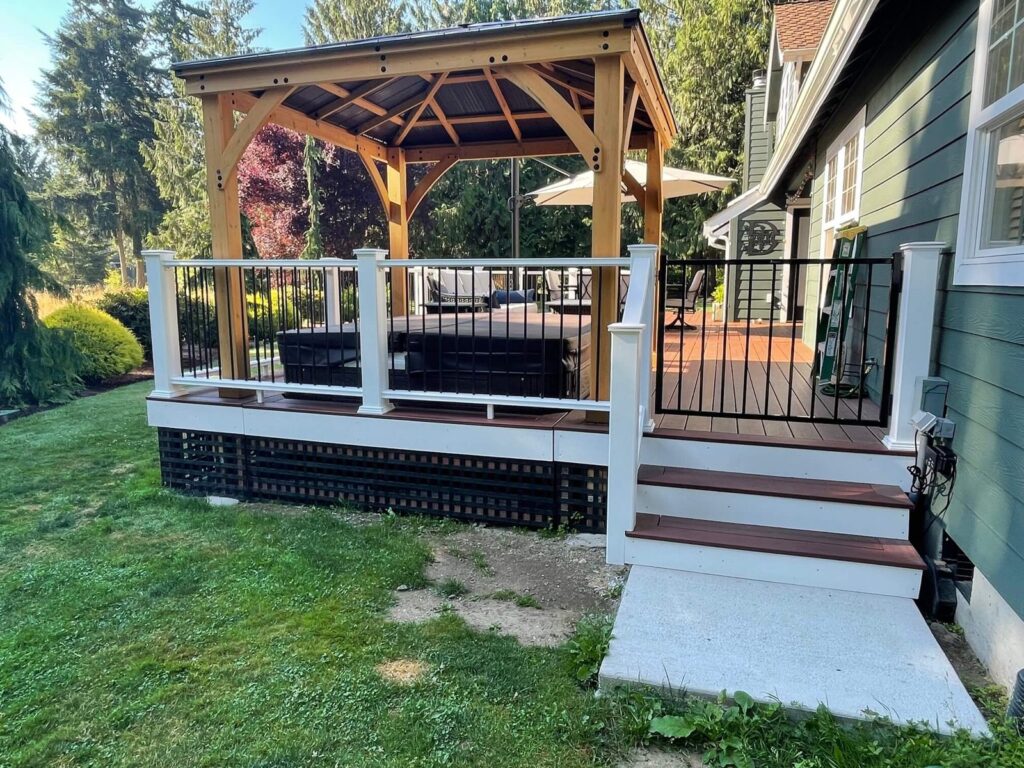
A deck that has rotted, sagged, or come loose often makes more sense to replace than to keep patching. We take down the outdated or damaged structure and build the new deck on a sound base.
A deck is a structure first and a surface second. The boards get the attention, but the footings, framing, and connections decide whether the deck still feels solid years from now. Here is how a new build or replacement moves from the first visit to the finished deck.
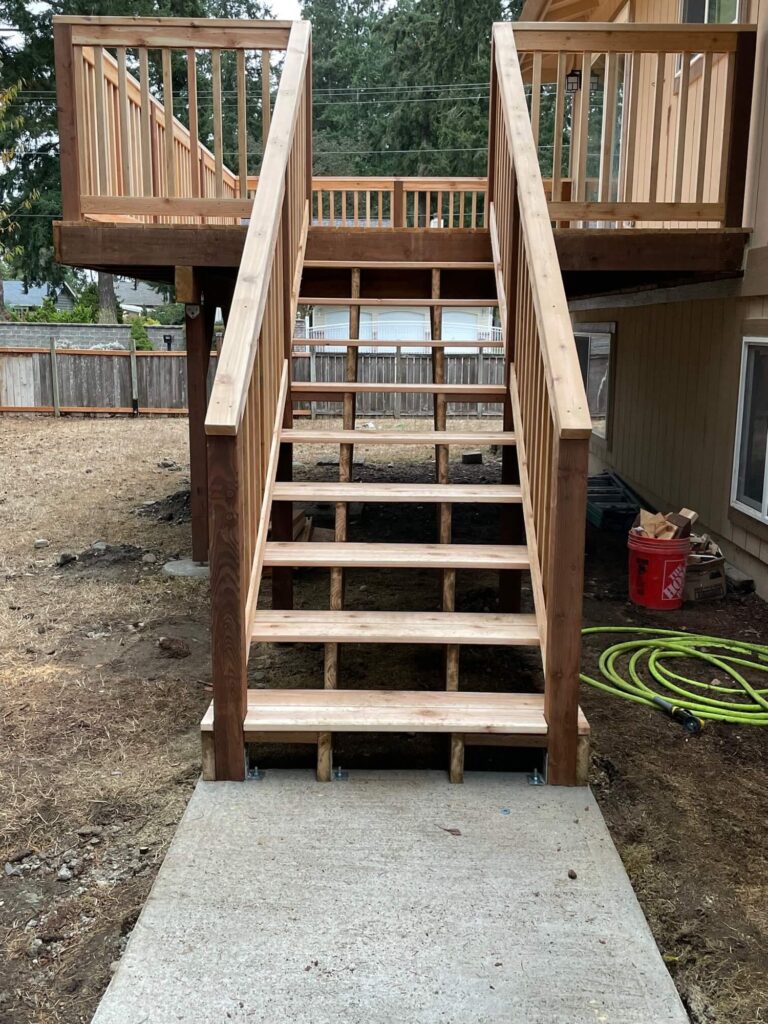
We assess the property and talk through how you plan to use the deck. The deck’s height off the ground, stair location, and whether it attaches to the house shape the design at this stage. You get clear pricing with no hidden fees before work begins.
Permit rules vary by city and county and depend mainly on the deck’s height and whether it attaches to the house. Goodrows handles the permits and inspections the project requires.
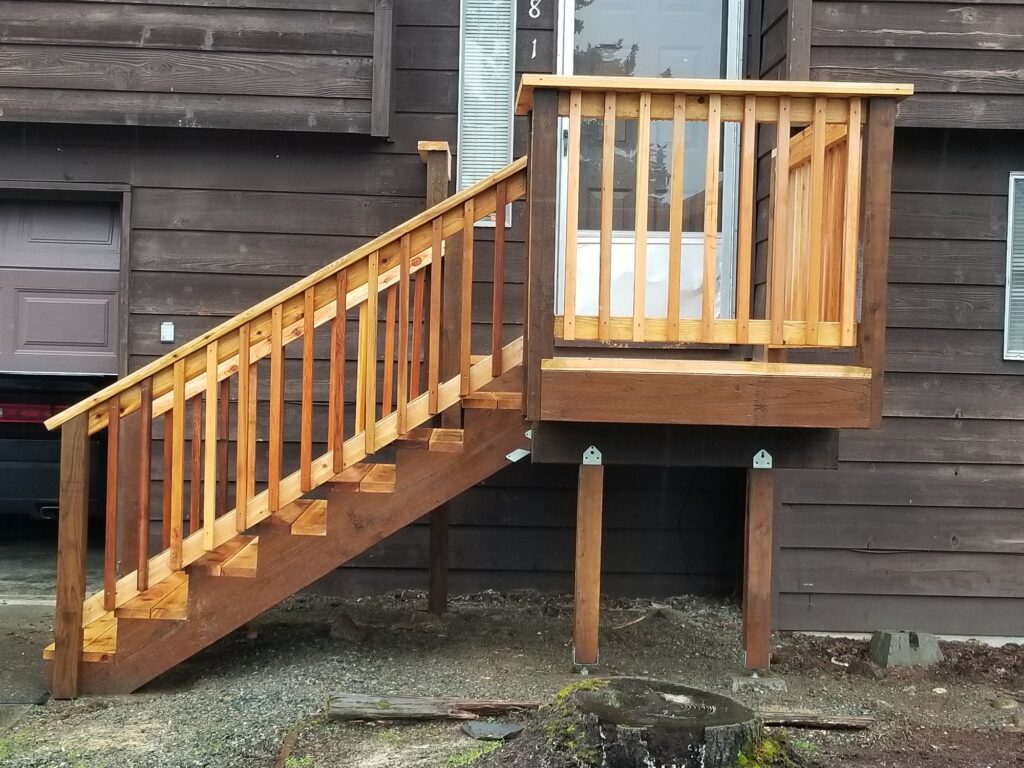
The load path starts in the ground. Concrete footings rest on undisturbed soil below the frost depth set by the local building department, and their size depends on the load each post carries. Post bases keep the wood off the concrete so it can dry between storms, and the posts carry the beams that hold the rest of the frame.
Joists span between the beams at a spacing the decking material allows. On an attached deck, the ledger board bolts to the house, and metal flashing over it sends rainwater past the joint instead of into the wall. Missing or failed ledger flashing is a common reason older decks rot at the house line.
Joist hangers, structural ties, and solid blocking tie the frame together so it stays stiff underfoot. Many builders also apply joist tape over the top edge of each joist to shed water that would otherwise soak into the wood beneath the boards.
Boards go down with the gap the material calls for, so water drains and the wood can move with the seasons. Depending on the material, exterior-rated screws or hidden fastener clips hold the boards, and a picture-frame border gives the edges a finished look. Stair stringers, landings, and railing posts need solid blocking behind them because people grab and lean on those parts. Fascia and skirting finish the perimeter and hide the frame.
Before the job closes, you walk the deck with us, test the railings and stairs, and raise anything that needs attention. If you choose cedar or pressure-treated decking, ask about our staining and finishing service. New pressure-treated lumber usually needs time to dry before it takes stain.
Ready to plan your new deck? Tell us what you want to build, and we will set a time to see the property and price the job.
We build with cedar, pressure-treated lumber, composite, and PVC decking. The right choice depends on how much upkeep you want, how the deck will look against the house, and your budget, and we help you weigh those factors.
| Decking | Upkeep | Look | Best fit |
|---|---|---|---|
| Cedar | Cleaning plus stain or sealer every few years | Warm natural grain; weathers to silver if left bare | Homeowners who want real wood and accept periodic care |
| Pressure-treated | Regular sealing to slow checking and splitting | Plain at first; takes stain once dry | Lower upfront cost and ground-level decks |
| Composite | Washing only; no stain or sanding | Uniform color with a wood-look grain | Low upkeep and long service in wet weather |
Cedar naturally resists rot and insects, weighs less than most decking, and stays cooler underfoot than composite in direct sun. It also pairs well with the cedar fencing many homeowners run along the property line. Like any wood deck, cedar needs periodic staining or sealing to maintain its color.
Pressure-treated lumber offers affordable durability that stands up to the elements. It forms the framing under most decks, whatever board goes on top, and works well as a budget-friendly surface for low platforms. The boards check and split as they dry, and regular sealing slows that wear.
Capped composite and PVC boards never need stain, and their protective shell resists moisture, fading, and stains. That makes them a practical choice for shaded, damp yards. The boards expand and contract with temperature, so gaps, fasteners, and joist spacing must follow the manufacturer’s installation instructions. Composite does nothing to protect the frame beneath it, so the framing still needs the same care as a wood deck.
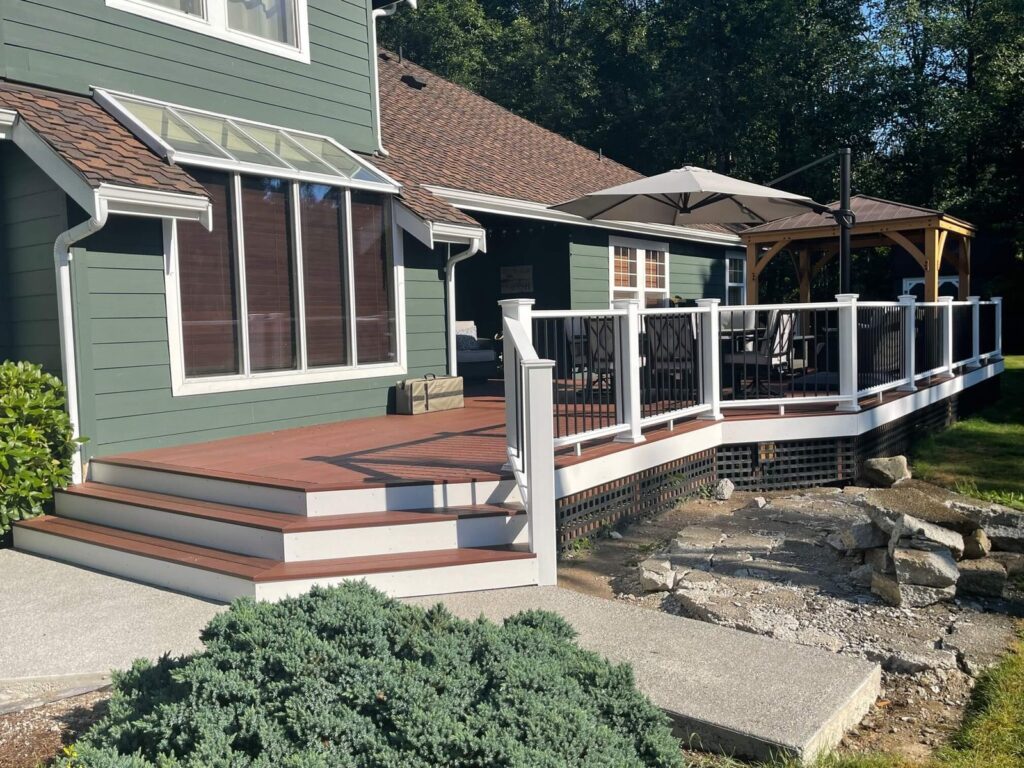
Railings carry a deck’s look and the weight of anyone who leans on them. Goodrows installs composite, vinyl, cable, iron, and glass railings, plus custom designs.
Cable and glass rails keep the view open, which suits elevated decks overlooking a yard or the water. Composite rails need little more than washing, and vinyl rails pair with vinyl fencing for a clean, low-upkeep finish. Iron gives a heavier, traditional look that can match the iron fencing elsewhere on the property. Custom designs cover other styles and material combinations.
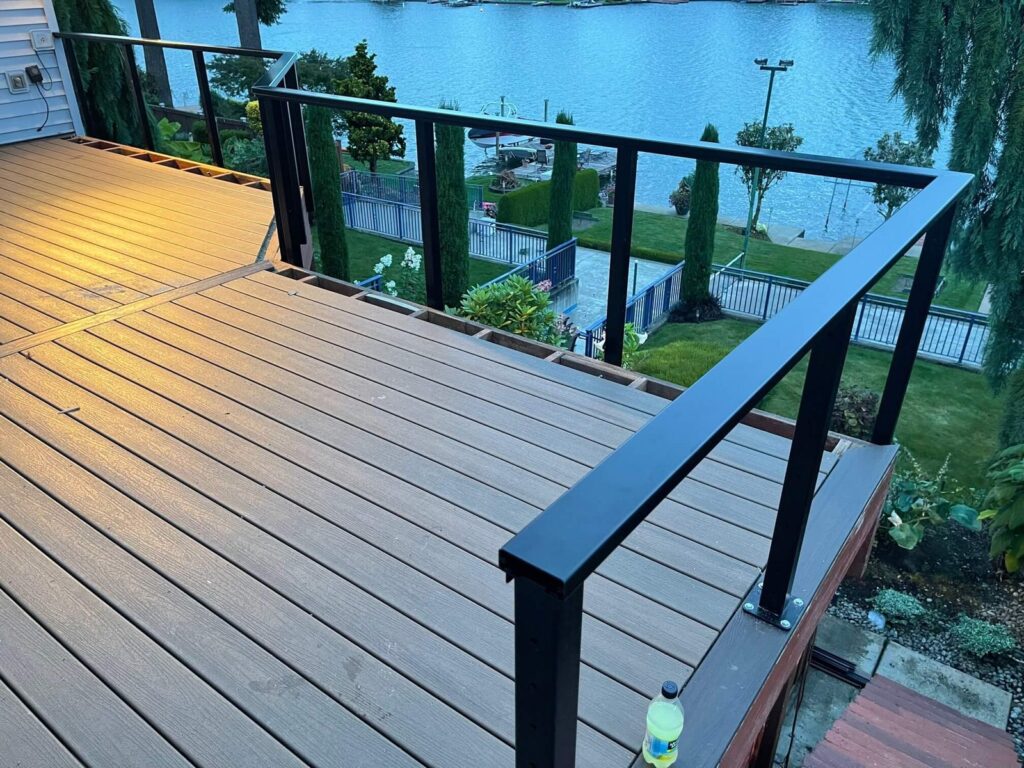
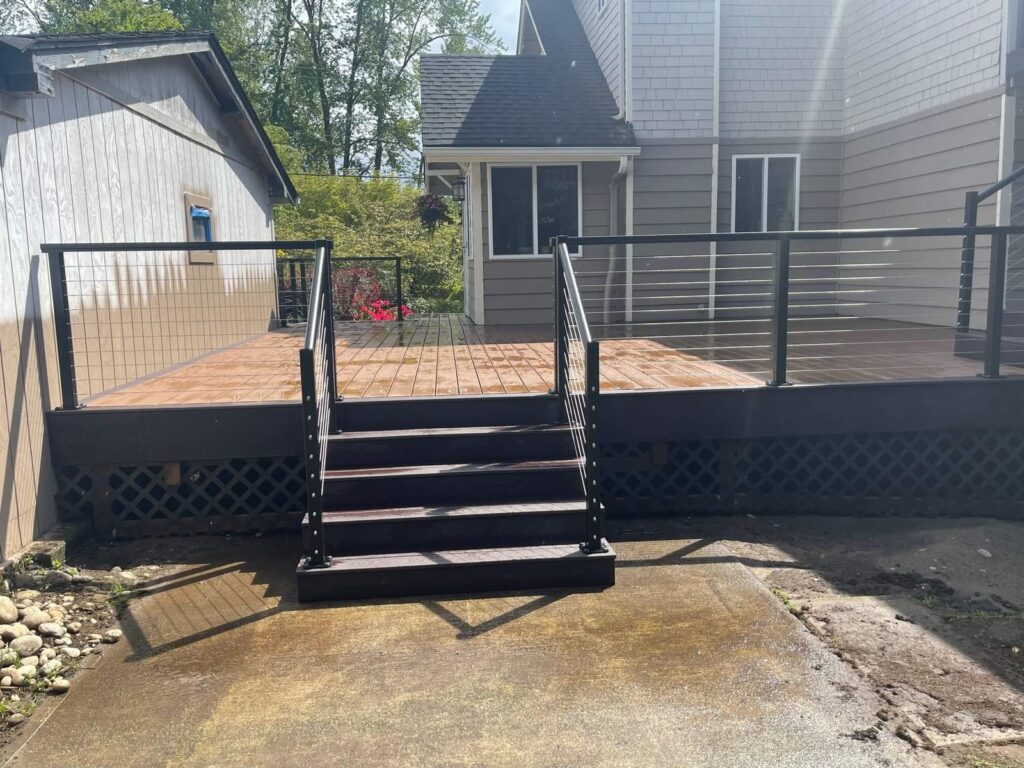
Washington’s residential code, based on the International Residential Code, requires a guard on any deck whose walking surface sits more than 30 inches above grade. The guard must stand at least 36 inches tall, and its openings must stop a 4-inch sphere from passing through. Stairs with four or more risers need a graspable handrail. Meeting these requirements helps protect children and pets and keeps the final inspection on track.
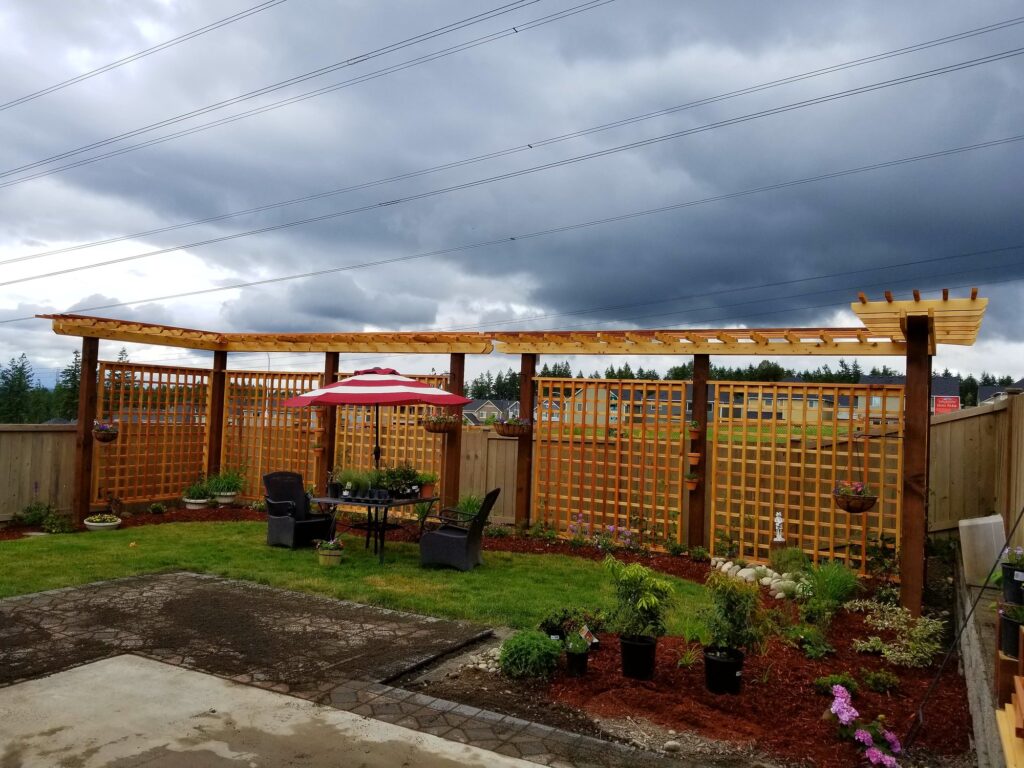
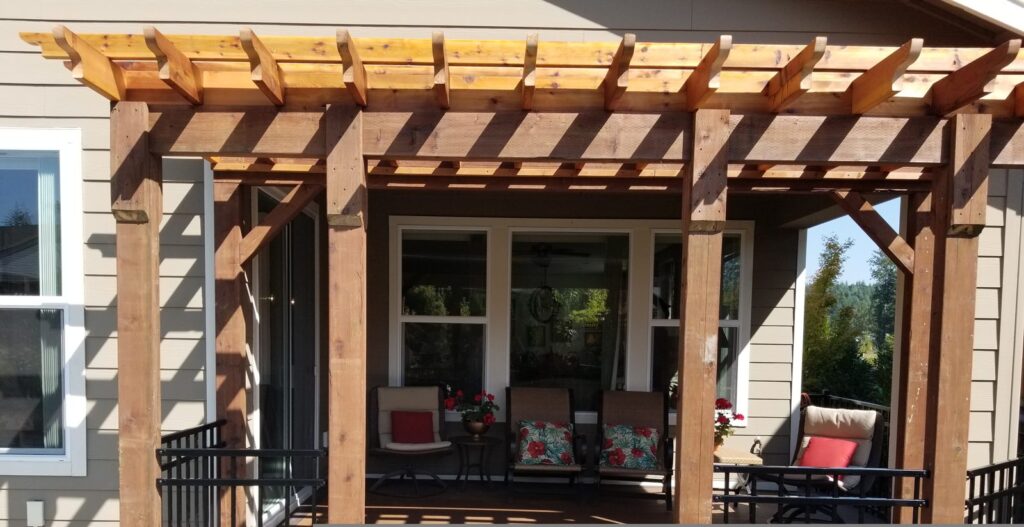
We plan stairs, landings, built-in seating, and deck lighting with the railing instead of adding them afterward. Stair lights make the deck safer after dark, and a built-in bench adds seating without crowding the floor. For shade, we also build patio covers, pergolas, and arbors.
Plan your deck with a free on-site estimate. Call Monday through Friday, 8:00 AM to 5:00 PM, or send us your project details online.
Many deck projects connect to the rest of your yard. A new deck often needs a privacy fence beside it, a gate to the side yard, or a railing that matches the fence line.
As a Tacoma fence company, Goodrows builds fences and decks under one license, so you can plan the deck, the fence around it, and the gate between them with one contractor. Deck building is one of the fence, deck, and gate services Goodrows Fence & Deck offers across Pierce County, alongside cedar, iron, vinyl, chain link, and farm fencing.
Working with one contractor means one schedule, one point of contact, and materials chosen to match. We also install manual and automated driveway gates, so your property’s entry can match the deck and fence behind it.
Before you hire a deck builder, check their credentials. Ours are on record:
Goodrows has more than 17 years of fencing and decking experience, serving homeowners and businesses throughout the region.
Goodrows is veteran-owned and operated. Military discounts are available, and the company makes regular donations to St. Jude Children’s Research Hospital.
A well-built deck still needs simple care in this wet climate. These habits help any deck last longer, wood or composite:
Goodrows builds decks across Pierce County and in Lacey, in Thurston County.
Our service area includes Tacoma, Spanaway, Parkland, Puyallup, South Hill, Lakewood, Graham, Edgewood, Bonney Lake, Buckley, Orting, Gig Harbor, and DuPont. For projects in two of those communities, see our pages for deck builders in Puyallup and deck contractors in South Hill.
Permit offices differ by location. A deck inside Tacoma city limits goes through the City of Tacoma, while one in unincorporated Spanaway or Graham goes through Pierce County. We handle the application either way.
Short answers to the questions homeowners ask before they call.
It depends on the deck’s height, whether it attaches to the house, and which city or county you live in. In unincorporated Pierce County, a deck no more than 30 inches above grade and not over a story below is generally exempt, but higher decks need a permit. If your project needs one, we handle the application and inspections so you don’t have to.
Timing depends on size, height, material delivery, and permit review. A simple ground-level deck moves faster than an elevated, multi-level build with stairs and custom railing. We keep you updated on the schedule while work is underway. Heavy rain can push back some outdoor steps, and we’ll let you know if it does.
It depends on the framing. If the posts, beams, joists, and ledger are sound, new boards, railings, or stairs may be enough. If rot has spread into the structure or the ledger was never flashed, replacement is the safer choice. We check the framing during the estimate and tell you plainly which one your deck needs.
Yes. Removing an outdated or damaged deck is part of our replacement work. Before the new framing goes up, we check the existing footings and posts and decide with you whether any can stay or whether the new deck needs new footings.
Composite boards cost more than cedar or pressure-treated lumber up front, but they skip the staining and sealing that wood needs in a wet climate. Over time, the lower upkeep can offset part of the higher price. Homeowners who prefer the feel of real wood still get a long-lasting deck from well-maintained cedar.
Yes. We build patio covers, pergolas, arbors, and trellises. A roof adds weight and wind load, so the posts, beams, and footings need to carry it. Mention a cover during the estimate so we can plan the deck framing to carry it from the start, which usually costs less than reinforcing a finished deck later.
Size, height, decking material, railing style, stairs, and site access drive most of the cost. Tearing out an old deck and replacing damaged framing adds to the total. We price each job after seeing the site and give you clear pricing with no hidden fees. Goodrows accepts cash, checks, and all major credit cards.
Book your free deck estimate. Tell us what you want to build, or what is wrong with the deck you have. We will come out, look at the site, and give you a straight answer on what it will take.
Goodrows Fence & Deck
Address: 424 112th St E, Tacoma, WA 98445
Phone: (253) 219-6682
Hours: Monday to Friday, 8:00 AM to 5:00 PM