

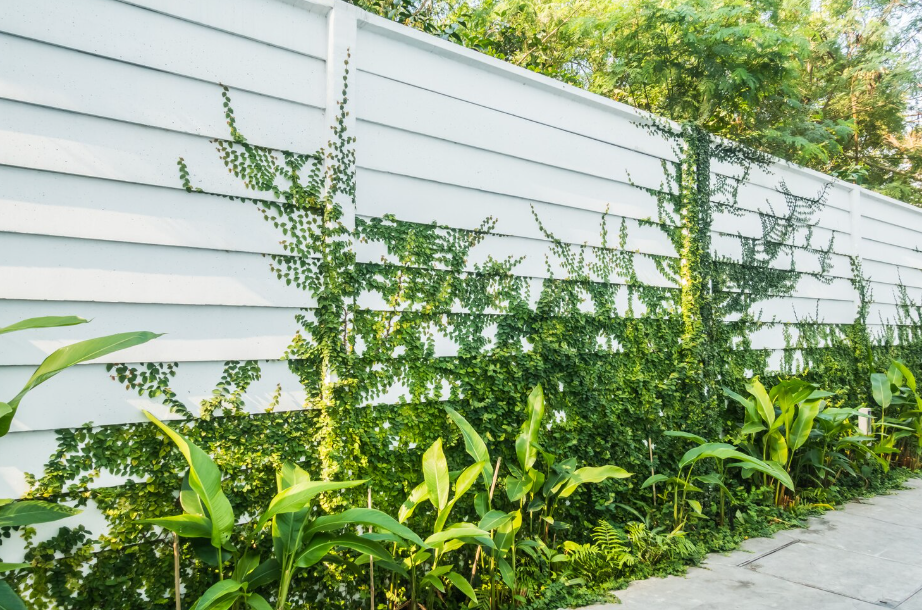
A horizontal fence changes how a yard reads from the street more than almost any other design choice. The boards run side to side instead of up and down, and that single shift gives a property a cleaner, more contemporary line than a standard vertical board fence produces.
It’s also the style Tacoma homeowners ask about most when they’re searching for the best local fence company, and it comes with real tradeoffs worth understanding before you commit: it costs more to install than a vertical fence in the same material, and it demands tighter execution from whoever builds it.
What Makes a Horizontal Fence Different from a Standard Build
Traditional board fences run their planks vertically, each one plumb against the next. Horizontal fencing flips that: the boards run side to side across the length of the run. The eye follows the line across the whole fence instead of tracking down individual boards, which gives it a sense of width that a vertical design doesn’t produce.
The build itself asks more of whoever’s doing it. Horizontal boards need to stay level across the full run, which takes more precise post placement than a vertical fence, where each board only needs to be plumb on its own. A gap that’s slightly off, or a run that isn’t quite level, shows up more on a horizontal design than it would on a standard vertical fence.
The Material We Recommend for Horizontal Designs in Pierce County
Western red cedar is what we use for nearly every horizontal fence project in Pierce County, and it’s our first recommendation for a residential horizontal build. So is cedar the best wood for fencing? In our experience, yes, the grain complements the clean lines of a horizontal layout, and cedar’s natural oils give it real moisture resistance for Tacoma’s climate. Left alone, it weathers to a silver-gray tone. Stained, it can match the home’s exterior. Sealed, it holds its original warm color. All three read as intentional in a horizontal design, not like a fence that’s aging by accident.
Composite comes up a lot in horizontal fence searches, so it’s worth being direct about it: it’s a decking material for us, not a fencing one. We install composite decking regularly, but we don’t currently build composite fence panels. If a low-maintenance, wood-look horizontal fence appeals to you and cedar’s upkeep schedule doesn’t, ask any contractor you’re considering whether composite fence panels, not just decking, are actually part of what they install.
Get the fence your property needs. Call Goodrow’s Fence & Deck at (253) 219-6682 today.
What Horizontal Fencing Costs in Tacoma
A horizontal fence costs more than a standard vertical fence built in the same material, and the difference comes from labor, not materials. Horizontal boards need continuous leveling and more precise placement across the full run, which takes longer than setting vertical boards plumb one at a time. A post that’s off by even a little affects how the whole run reads from the street, so there’s less room for error.
Cedar privacy fencing in Tacoma typically runs $25 to $45 per linear foot installed, covering materials, posts, footings, hardware, and labor. Understanding cedar fence cost upfront helps homeowners budget accurately before reaching out for quotes. A horizontal cedar fence generally lands toward the higher end of that range because of the added labor, though the exact number depends on linear footage, fence height, site conditions like slope, and whether gates are part of the scope. Properties with tricky terrain or limited access cost more than a flat, straightforward run. An on-site estimate is the only way to get a number that actually holds up, snce so much depends on what your specific yard looks like.
| Vertical Cedar Fence | Horizontal Cedar Fence | |
|---|---|---|
| Labor | Standard | Higher, continuous leveling across the run |
| Look | Traditional | Clean, modern |
| Typical cost per linear foot | Lower end of $25-$45 | Higher end of $25-$45 |
| Best fit | Traditional neighborhoods | Contemporary or renovated homes |
Curb Appeal and HOA Rules in Tacoma Neighborhoods
Horizontal fencing reads differently from the street than a traditional vertical board fence. The clean, linear look tends to suit newer construction and recently renovated properties especially well, and in neighborhoods where vertical styles are still the norm, a horizontal fence can visibly update how a property feels.
Before settling on a horizontal design, check whether your property falls under an HOA or one of Tacoma’s zoning rules for fence height and style. Some HOAs restrict fence styles or materials outright, and a horizontal design may or may not be allowed depending on the governing documents. Confirming that before the design is final costs nothing. Finding out after the fence is in the ground costs considerably more, and it turns a straightforward project into a timeline problem.
Installation Details That Affect the Finished Look
Post placement is the foundation of a horizontal fence that looks right. A post that’s out of level or out of line affects every board that runs between it and the next one, and those small errors compound across a long run. We spend more time on layout and alignment before any boards go up than we would on a vertical fence, which adds time upfront but is what keeps the finished product looking deliberate instead of slightly off in a way that’s hard to name but easy to see from the street.
Gap sizing is the other detail that shapes both the look and the function. Horizontal designs often use visible gaps between boards, which adds to the modern look and lets air move through the fence. The right gap depends on board width, fence height, and how much privacy you actually want. Too narrow, and the fence looks compressed. Too wide, and it stops functioning as a privacy screen and becomes closer to decorative. These get worked out during planning, not adjusted mid-installation.
Questions worth asking before you commit to a horizontal design:
- Does your HOA or neighborhood covenant restrict fence style, height, or material?
- Is the property’s terrain flat, or does it have slope and obstacles that add to labor time?
- How much privacy do you actually need, versus how much airflow and visibility you’re willing to trade for the look?
- Are you comparing quotes that separate labor from materials, so you can see where the horizontal premium is actually coming from?
- Does the contractor you’re considering install composite fence panels, or only composite decking?
If you’re deciding between the look of horizontal fencing and the cost difference, an on-site estimate gets you a real number instead of a guess, and we can walk you through what your specific property adds to the cost before you commit to anything.
What to Know Before Your Project Begins
A horizontal fence project starts with a site visit, not a price quote. We walk the property, review the terrain, and talk through design choices, material, gap sizing, fence height, post spacing, and gate locations before any numbers get put together. Working through those details ahead of time is what keeps a cedar fencing project from turning into a series of mid-installation adjustments.
We’ve built horizontal cedar fences across Tacoma, Puyallup, and Spanaway since 2006, for homeowners who wanted the contemporary look without giving up the durability that Pierce County’s climate demands.
Frequently Asked Questions
Does a horizontal fence cost more than a vertical one?
Yes. In the same material, a horizontal fence typically costs more because of labor, not materials. The boards need continuous leveling across the full run, which takes longer than setting vertical boards plumb one at a time.
What’s the best material for a horizontal fence in Tacoma?
Western red cedar is what we recommend and install most for horizontal designs in Pierce County. Its grain suits the clean lines of the style, and its natural oils hold up well against Tacoma’s rain. Composite is a popular look elsewhere, but it’s a decking material for us, not a fencing one.
Do I need HOA approval for a horizontal fence in Tacoma?
It depends on your property. Some HOAs restrict fence style, height, or material, and Tacoma’s zoning rules can also apply. Check your governing documents before finalizing a design, since changing a fence after installation costs far more than confirming the rules upfront.
How much does a horizontal cedar fence cost in Tacoma?
Cedar privacy fencing in Tacoma typically runs $25 to $45 per linear foot installed. A horizontal design generally lands toward the higher end of that range because of the added labor, though the final number depends on linear footage, height, terrain, and gates.
Get the fence your property needs. Call Goodrow’s Fence & Deck at (253) 219-6682 today.