

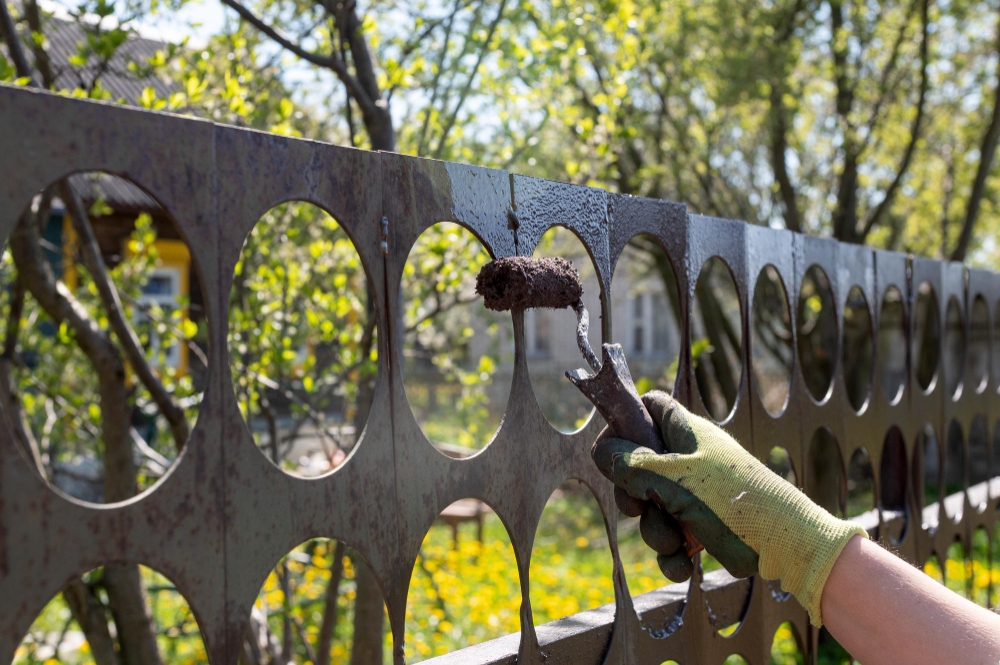
Rust on an ornamental iron fence starts at a break in the protective coating, not across the surface as a whole. Intact finish keeps moisture off the metal indefinitely. A chip from a mower, a scratch from a gate latch or a weld that never got coated properly gives water a single point of contact, and oxidation spreads outward from there.
That distinction shapes everything about protecting iron in Pierce County. The goal is not keeping an iron fence dry, which is impossible here. The goal is keeping the coating unbroken and dealing with breaks quickly when they appear.
Why Iron Fences Rust in Our Climate
Rust needs iron, oxygen and water together. Our climate supplies the last two generously for a large share of the year, so the only variable a homeowner controls is whether water can reach bare metal. Steady rainfall is actually less damaging than the long damp periods between storms, when surfaces stay wet without ever fully drying.
Position on the property matters as much as weather. Sections under tree cover or against shrubs stay wet far longer than an exposed run along a driveway. Panels near sprinkler spray get soaked on a schedule through the dry months when the rest of the fence is fine. Ornamental iron fencing installations across Tacoma and South Hill hold up well in general, and where rust does appear, it is almost always concentrated in one predictable stretch rather than spread evenly along the line.
Where Rust Starts First
Rust is not random, and knowing the vulnerable points turns inspection into a five minute job rather than a crawl along the whole fence. Certain locations take damage or hold water by design, and those are where oxidation shows up first on nearly every fence we are called out to look at.
Ground contact leads the list. Pickets and posts that meet soil or sit in a bed of mulch stay in contact with moisture constantly, and any coating flaw at that height fails quickly. Welds come next, since the heat of welding burns off coating and the joint is not always recoated to the same standard as the factory finish. Horizontal surfaces hold standing water where vertical ones shed it, so rail tops and decorative caps collect. Hardware points take mechanical wear every time a gate swings.
- Base of posts and pickets at the soil line
- Weld joints, especially at corners and rail connections
- Flat top surfaces of rails and caps that hold water
- Hinge and latch points where metal rubs metal
- Any chip from mowing, trimming or impact
Touching Up Damage Before It Spreads
Surface rust is a minor repair. Rust that has worked into the metal is a structural problem, and the gap between those two states is a matter of months rather than years in a wet climate. Addressing a chip when it appears costs very little. Addressing it after a winter costs considerably more.
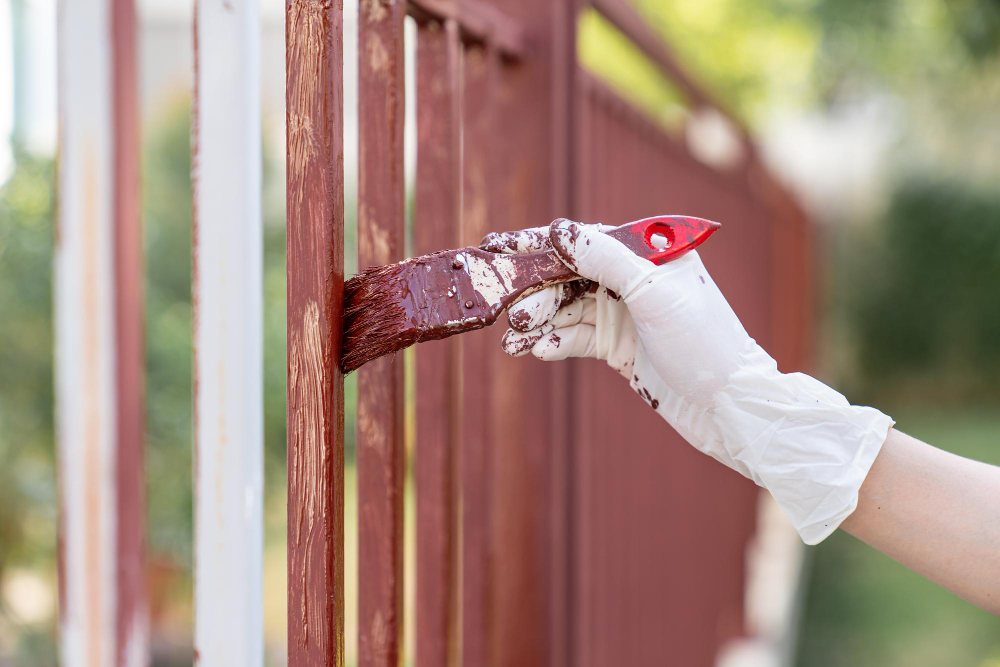
The sequence is straightforward. Remove the rust mechanically with a wire brush or sandpaper until clean metal shows, since coating applied over rust simply traps the oxidation and lets it continue underneath. Clean and dry the area completely. Apply a rust inhibiting primer, then a finish coat that matches the fence. Doing this during a dry stretch matters as much as it does with sealing wood, because trapped moisture under fresh coating defeats the entire effort.
Seeing rust spread on your fence? Call us at (253) 693-4337, we repair ornamental iron as well as install it. A free on site assessment will tell you whether it is a touch up or a section that needs replacing.
What We Do Differently on Iron Installations
Factory finishes are good. The weak point in most iron fence installations is what happens to that finish during and after the build, and that is within our control. Welds done on site get coated properly rather than left bare, because an uncoated weld is a rust starting point built into the fence on day one.
Height off the ground is the other decision that pays off for years. Keeping pickets clear of soil contact rather than letting them sit in dirt or mulch removes the single most common failure location before it exists. On properties where the grade falls, we step the panels rather than letting the bottom rail dive into the earth at one end. A common question from homeowners weighing their options is how iron compares with wood for a front yard, and this breakdown of cedar and iron fencing side by side explains the privacy and cost differences in detail.
A Realistic Inspection Routine
Twice a year is enough. Once in early fall before the wet season, and once in spring to catch anything winter started. The fall pass matters more, because a chip repaired in September stays sealed through the months when it would otherwise be absorbing water daily.
Walk the fence looking specifically at the five locations above rather than scanning the whole structure. Run a hand along rail tops to find roughness the eye misses. Check gate hardware while operating it, since wear shows up in motion that is invisible when the gate is closed. Clear vegetation away from any section it is touching. The entire routine takes fifteen minutes on a typical residential run, and it is the difference between an iron fence that looks sharp at year twenty and one that needs a section rebuilt at year ten.
Need iron fencing installed or repaired? Give us a call at (253) 693-4337, we have worked Pierce and Thurston County since 2006 with more than 500 completed projects, and we coat on site welds properly because the alternative shows up two winters later. Veteran owned, licensed, insured and bonded, with free on site estimates throughout Tacoma, Spanaway, Puyallup, South Hill, Lakewood and Bonney Lake.
Related Topics: