

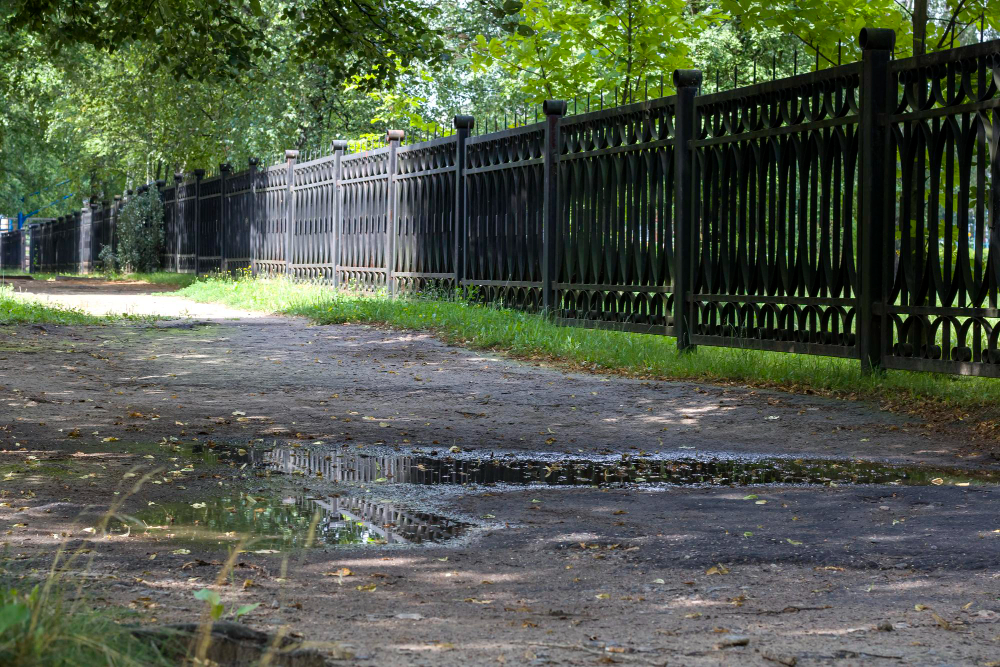
Protecting a fence from rain damage comes down to three things: keeping standing water off the post bases, sealing exposed wood before the wet season arrives, and matching the material to the site. We have built and repaired fences across Tacoma, Spanaway and Puyallup since 2006, and almost every rot call we take traces back to one of those three being skipped.
Rain alone rarely destroys a fence. Water that sits in one place for months at a time does. The difference between a cedar fencing that reaches twenty years and one that leans at year eight usually has nothing to do with the boards and everything to do with what is happening at ground level.
Why Rain Causes More Fence Damage in Pierce County Than Most Places
Western Washington does not get dramatic rainfall totals compared to parts of the Gulf Coast, but it gets persistent rainfall. Our wet months run long and the ground rarely dries out between storms. Soil stays saturated for weeks, which means a fence post here is sitting in damp earth for a far greater share of the year than one in a drier climate.
That changes how failure happens. Instead of dramatic storm damage, we see slow decay that starts underground and stays invisible until a post snaps at the soil line. Across all fencing and gate services, rot at the base is the single most common reason a homeowner calls about a fence that looked fine from the house. The top two thirds of the fence is often still sound when the bottom six inches has already turned to pulp.
Seal and Stain Before the Wet Season, Not After
Timing matters more than product choice. A sealer applied to damp wood traps moisture inside the board instead of keeping it out, which does more harm than leaving the fence bare. The window that works in Pierce County is a stretch of dry weather in late summer or early fall, after the boards have had several days to dry and before the rain settles in for the season.
New cedar also needs a waiting period. Fresh boards carry mill oils and high moisture content that stop a finish from absorbing properly, so we tell homeowners to give a new cedar fence a few months of weather before the first coat goes on. After that, a re-coat every two to three years keeps the surface sealed. A proper pass covers more than the face boards:
- Both sides of every picket, not just the side facing the yard
- End grain at the top of each board, where water enters fastest
- The bottom edge of the boards, which most people never reach
- Rails and any exposed post faces above grade
- Gate frames and hardware mounting points
Keep Water Away From the Post Bases
Everything above the soil line is maintenance. Everything below it is installation, and it is the part that decides how long the fence lasts. A post set in a concrete collar that traps water around the wood will rot from the inside out no matter how well the boards are sealed.
Our crews set posts with drainage in mind. Gravel at the base of the hole gives water somewhere to go instead of pooling against the post bottom. Concrete gets sloped away from the post at the surface so runoff sheds outward rather than collecting in a ring. On properties where the yard drains toward the fence line, we will often recommend moving the run a foot or shifting the grade before a single post goes in. Homeowners sometimes resist that conversation. The ones who skip it tend to call back.
Planning a fence this season? Our estimates are free, on site and carry no obligation. We walk the line with you, check the drainage, and tell you what the ground is actually going to do before you commit to anything.
Materials That Handle Steady Rain Better Than Others
Material choice changes the maintenance burden more than it changes the lifespan. Every option we install can work here, and the comparison of materials that last in wet climates is worth reading before an estimate. What separates them is how much attention each one needs to get through a decade of wet winters.
Cedar carries natural oils that resist moisture and insects, which is why it has been the regional default for generations, but it needs that recurring seal to hold the line. Vinyl will not rot at all and asks almost nothing of the owner, at the cost of fewer style options. Ornamental iron handles water fine structurally and fails instead at the finish, where rust takes hold at scratches and welds. Chain link galvanizes well and is largely indifferent to rain.
| Material | Rain weakness | Upkeep to prevent it |
|---|---|---|
| Cedar | Rot at base and end grain | Seal every 2 to 3 years |
| Vinyl | Algae film, not decay | Wash annually |
| Ornamental iron | Rust at coating breaks | Touch up chips as they appear |
| Chain link | Rust at cut ends | Minimal |
If low upkeep is the priority, that tradeoff is the one to weigh hardest before signing anything.
What We Do on Site to Protect a New Fence
Protection starts at installation, and most of it is invisible once the job is finished. We set posts below the frost line, pack and drain the base properly, and keep the bottom of the boards clear of the soil rather than resting them on dirt that holds moisture against the wood.
Vegetation is the part homeowners control afterward. Shrubs pressed against a fence hold water on the boards long after a storm passes and keep that stretch permanently damp. Sprinkler heads aimed at a fence line do the same thing on a schedule. Trimming back growth and redirecting spray costs nothing and adds years. For vinyl owners, the guide to cleaning vinyl fence panels covers the annual wash that keeps algae from taking hold.
Frequently Asked Questions
Yes. Sealing or staining slows moisture absorption into the boards, which is what drives warping, splitting and surface rot. A cedar fence that gets re coated every two to three years will typically reach the upper end of its 15 to 20 year range. One left bare weathers to grey and reaches the lower end.
Give it several months. Fresh cedar holds mill oils and high moisture content that prevent a finish from absorbing properly, so an early coat tends to sit on the surface and peel. Waiting through a season and applying during a dry stretch produces a far better result.
Yes, and it is common. Concrete that cups around the post bottom holds water against the wood instead of letting it drain. Posts set with gravel at the base and concrete sloped away at the surface shed water instead of trapping it.
Vinyl does not rot, warp or need sealing, so it carries a lower maintenance burden over its life. Cedar offers more style options and a natural look but requires recurring upkeep. Both perform well here. The right answer depends on how much ongoing work you want to take on.
Watch the base of the posts. Soft wood at the soil line, dark staining that does not dry out, and posts that move when pushed all point to decay below grade. Boards that cup or split usually signal a finish that has worn through.
Yes. Moss holds moisture directly against the surface and keeps that section damp between storms. A gentle wash removes it without damaging the wood. Pressure washing on a high setting does more harm than the moss did.
Contact Us
We serve Tacoma, Spanaway, Puyallup, South Hill, Lakewood, Bonney Lake and the surrounding Pierce and Thurston County communities. Veteran owned and operated, licensed, insured and bonded.
Phone: (253) 219-6682
Hours: Monday to Friday, 8:00 AM to 5:00 PM
Address: Spanaway, WA 98387
Call us to schedule a free on site estimate, or send us a message through the contact form on our website.