

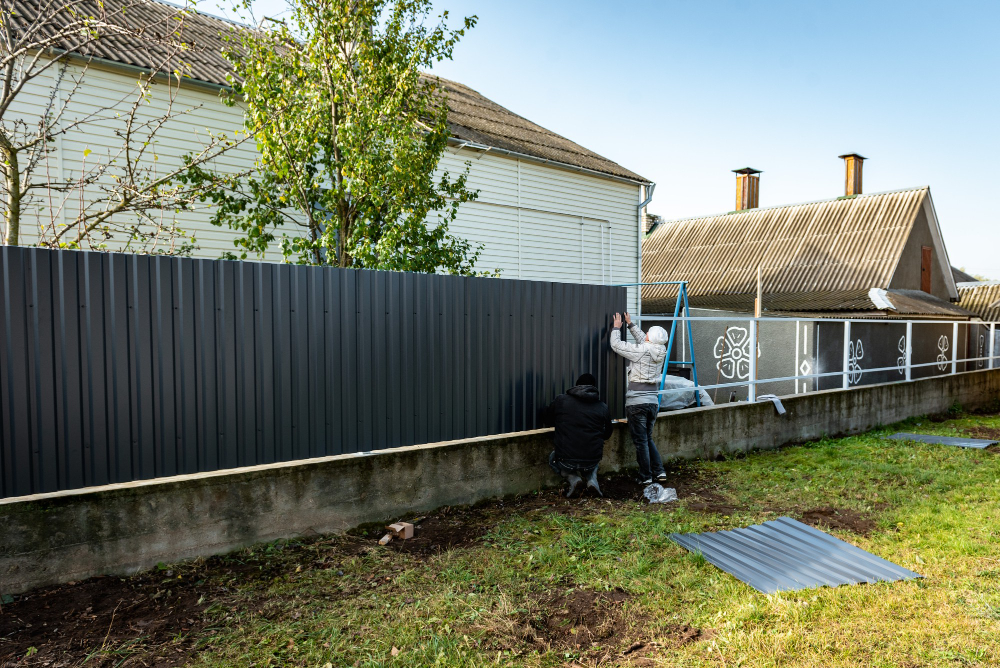
Damage type decides whether a fence gets repaired or replaced, and the age of the fence matters far less than most homeowners expect. A twenty year old cedar fence with two broken boards is a repair. A seven year old fence with failing posts along half the run is usually a replacement, regardless of how new it looks from the street.
We assess this distinction constantly across Pierce County, and the honest answer sometimes costs us a larger job. A homeowner told to replace a fence that only needed four boards tends to figure that out eventually.
The Question That Actually Decides It
Posts determine the answer more than anything above ground. Panels, boards and rails are replaceable components that attach to a structure. Posts are the structure. A fence with sound posts and damaged panels is almost always worth repairing, because the expensive and labor intensive part of any fence is already in the ground and still doing its job.
Reverse that and the economics invert. Failing posts mean digging, setting and curing new anchors, which is the bulk of an installation’s labor. Doing that work while reusing weathered boards produces a fence that looks old on new bones and will need the boards replaced within a few years anyway. With fence repair and installation services, post condition is always the first thing checked, ahead of the visible damage the homeowner originally called about.
Damage Types That Point to Repair
Localized damage with intact structure is repair territory, and this covers the majority of calls we take. The fix is contained, the cost is modest, and the remaining fence continues its normal life.
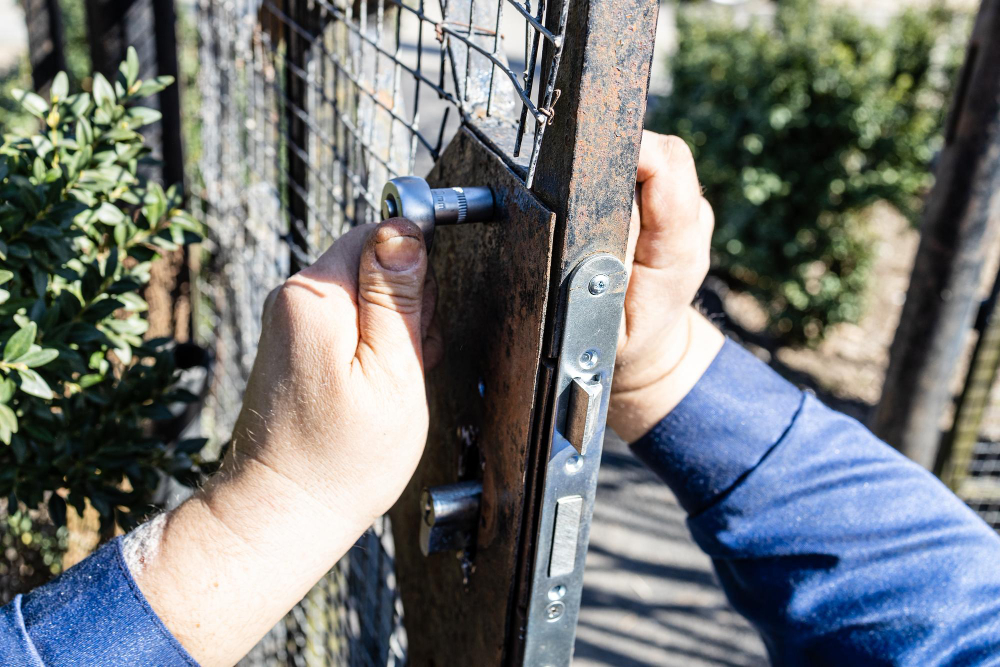
Impact damage is the clearest case. A vehicle backing into a section, a tree limb coming down in a storm, a gate post knocked out of alignment. The damage is sudden, bounded and obvious, and the rest of the fence is in whatever condition it was the day before. Individual rotted boards fall into the same category when the rot is confined to the boards themselves, which happens where one section sits against vegetation or takes sprinkler spray. Sagging gates are nearly always a repair, since the issue is typically hardware, alignment or a single post rather than the fence as a whole.
| Damage type | Typical fix | Structure affected |
|---|---|---|
| Vehicle or storm impact | Replace affected section | No |
| Scattered rotted boards | Board replacement | No |
| Sagging or dragging gate | Hardware or single post | No |
| One leaning post | Reset or replace post | Minimal |
| Rot along post bases | Full replacement | Yes |
Not sure which side of the line your fence falls on? Call us at (253) 693-4337, we assess free, on site, and tell you what the fence actually needs rather than what we would prefer to sell.
Damage Types That Point to Replacement
Systemic problems are a different situation, and patching them produces repeated callbacks rather than a solved problem. Rot at the base of multiple posts is the clearest signal. When several posts have decayed at the soil line, the others are usually not far behind, since they were installed at the same time in the same conditions and have had the same exposure.
Widespread leaning across a run says the same thing. One tilted post is a local problem. A line that wanders tells you the anchoring has failed broadly, whether from decay, frost heave or an installation that never went deep enough. Vinyl that has become brittle and cracks in multiple places has reached the end of its usable life rather than suffering isolated damage. When replacement is the right call, this guide to removing an old fence before installation explains what the teardown involves and what becomes of the old material.
How the Cost Comparison Usually Works Out
Repairs price by the scope of the damage. Replacements price by the length of the fence. That difference is what makes the decision clear at the extremes and genuinely close in the middle.
Replacing a handful of boards on a sound fence is a fraction of what a new run costs, and no reasonable assessment would push a homeowner toward replacement in that situation. Once the repair scope reaches roughly a third of the fence, the arithmetic shifts. Repair labor does not scale down efficiently, so fixing many scattered sections approaches the cost of replacing the whole thing while leaving you with a fence of mixed age and mismatched weathering. New material next to fifteen year old cedar never quite blends, and that bothers homeowners more than they anticipate.
There is a middle case worth naming. A fence that is structurally fine but visually tired is a repair decision made on appearance rather than need, and that is a legitimate reason to replace. We will say plainly which category a fence falls into so the choice is yours to make with accurate information.
What Our Assessment Covers
An estimate for this question is not a glance from the driveway. We walk the full run and check posts individually, since the ones that fail are rarely the ones a homeowner has noticed. Probing at the soil line finds decay that is invisible above grade, and that single check changes the recommendation more often than any other.
Beyond the fence itself, we look at why the damage happened. Drainage that sends runoff along the fence line will destroy a replacement on the same timeline as the original unless something changes. Vegetation holding moisture against the boards does the same. Sprinklers aimed at the fence do it on a schedule. Pointing these out costs nothing and saves the homeowner from paying twice. After more than 500 projects in Pierce and Thurston County since 2006, the repairs we regret are the ones where nobody addressed the cause.
Want a straight answer on your fence? Give us a call at (253) 693-4337, we serve Tacoma, Spanaway, Puyallup, South Hill, Lakewood and Bonney Lake with free on site assessments and no obligation. Veteran owned and operated, licensed, insured and bonded, with Hearth financing available and a 5% discount for military, first responders and seniors.
Related Topics: